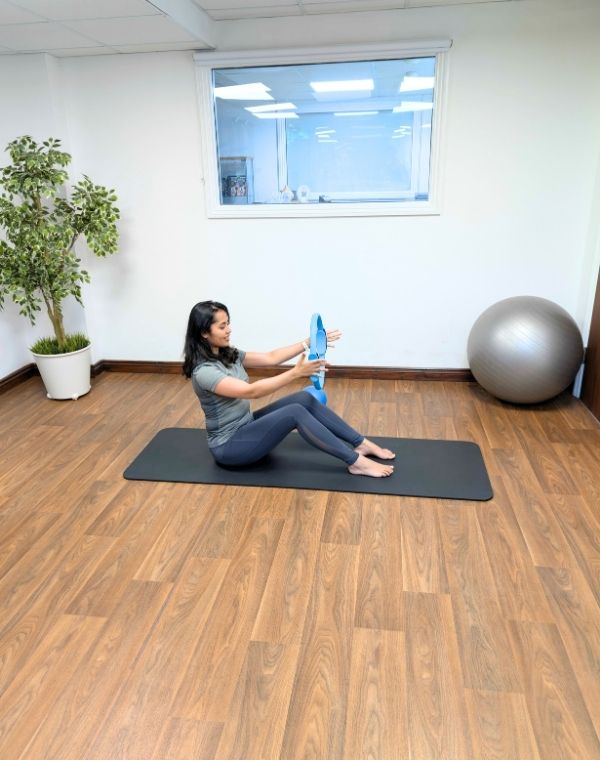



The main LPAW clinic is in Bow, E3, London, right next to The Bow Quarter. This bright and spacious clinic offers 4 treatment rooms, 2 changing rooms with showers, a large rehab gym, & onsite hydrotherapy in our 17 foot pool.
The LPAW satellite clinic is based in Stratford East Village where we run a thriving sports rehab offering.
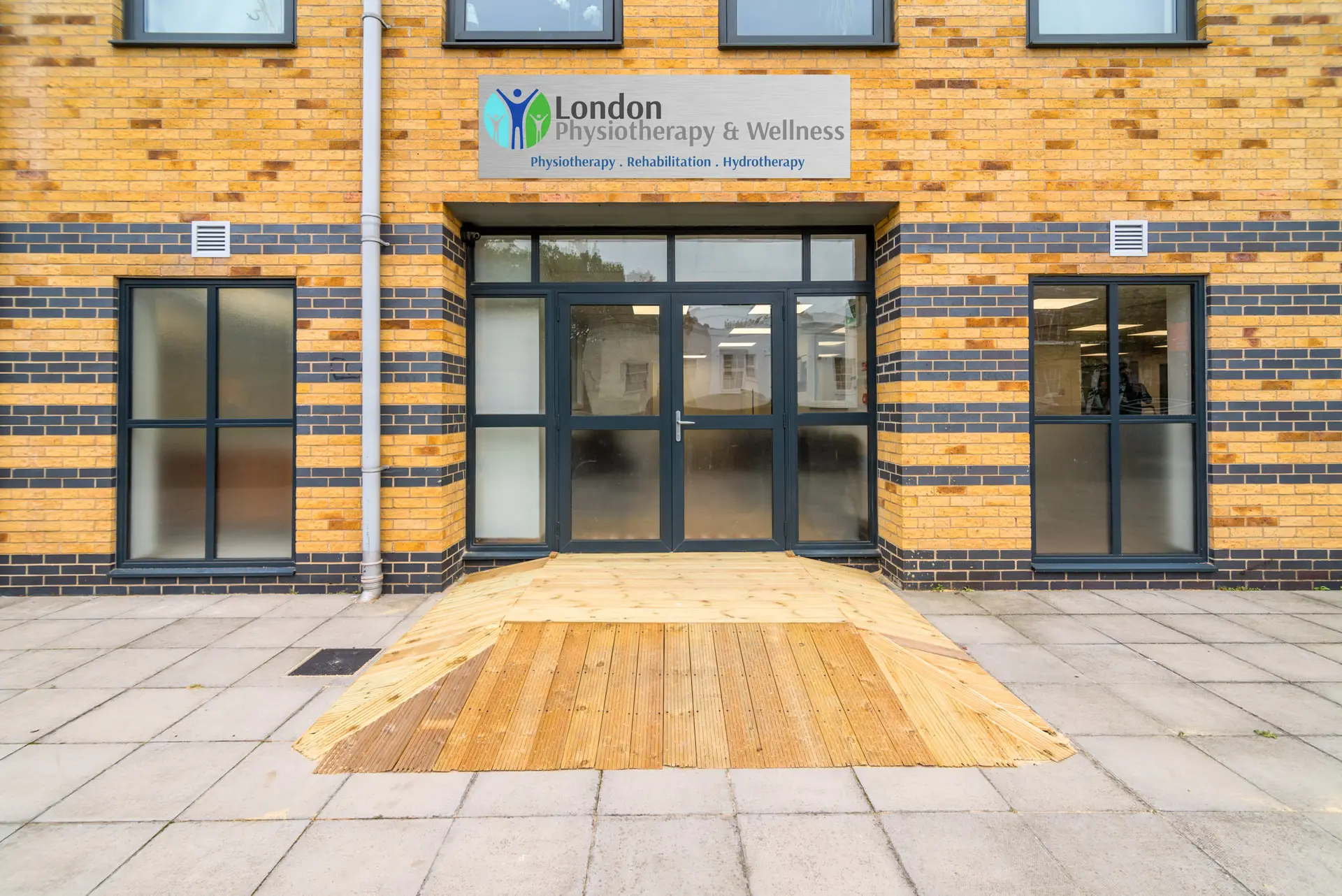
The main LPAW clinic is in Bow, E3, London, right next to The Bow Quarter. This bright and spacious clinic offers 4 treatment rooms, 2 changing rooms with showers, a large rehab gym, & onsite hydrotherapy in our 17 foot pool.
The LPAW satellite clinic is based in Stratford East Village where we run a thriving sports rehab offering.
Sciatica & Disc Pain Treatment in East London — Conservative Management That Works
Sciatica is one of the most painful and commonly mismanaged conditions. At LPAW we treat with thorough assessment, accurate diagnosis, and evidence-based management — including our Med-X Spinal Gym for chronic cases. Available at our Bow and Stratford East Village clinics.
Between each pair of vertebrae sits an intervertebral disc — a structure with a tough outer ring (annulus fibrosus) and a gelatinous inner core (nucleus pulposus). The disc functions as a shock absorber and allows spinal movement.
Disc herniation occurs when the nucleus pulposus pushes through a weakened area of the annulus fibrosus. Depending on the direction and severity:
Disc bulge — the disc extends beyond its normal boundary without the inner core breaching the outer ring. Often used loosely, but technically distinct from herniation.

Disc herniation / prolapse — the nucleus pulposus protrudes through the annulus and may compress adjacent nerve roots if it enters the spinal canal or foramen.
Disc extrusion / sequestration — more severe herniation where disc material fully breaches the annulus and may migrate within the spinal canal, potentially causing significant nerve compression.
Disc herniation causing sciatica most commonly occurs at L4/5 (affecting the L5 nerve root) or L5/S1 (affecting the S1 nerve root):
L4 nerve root: Pain into the anterior thigh and medial leg, quadriceps weakness, reduced knee reflex
L5 nerve root: Pain into the lateral leg and dorsum of the foot, weakness of foot and big toe extension
S1 nerve root: Pain into the posterior calf and sole of the foot, calf weakness, reduced or absent ankle reflex
Non-disc causes of sciatica:
Piriformis syndrome — sciatic nerve irritation or compression by the piriformis muscle in the buttock
Sacroiliac joint dysfunction — may refer pain in a sciatic-like pattern
Tumour or cyst in the spinal canal (rare) — typically identified through red flag assessment
Most back pain is benign and responds to physiotherapy. However, certain features require urgent medical assessment. Seek immediate medical attention if you experience:
Cauda equina syndrome is a neurosurgical emergency. This occurs when a large disc herniation compresses the cauda equina — the bundle of nerve roots below the end of the spinal cord. Seek immediate emergency assessment if you experience:
Bladder dysfunction — difficulty urinating, urinary retention, or loss of bladder control (incontinence)
Bowel dysfunction — difficulty opening bowels or loss of bowel control (faecal incontinence)
Saddle anaesthesia — numbness in the groin, inner thighs, perineum, or genitals
Severe progressive bilateral leg weakness
These symptoms, alongside back or leg pain, require immediate attendance at A&E rather than physiotherapy. Early treatment (ideally within 48 hours) is associated with significantly better outcomes.
Other red flags (require medical assessment, not emergency):
Sciatica in a patient with a history of cancer
Unexplained weight loss with spinal pain
Fever with spinal symptoms
New onset sciatica in patients under 20 or over 55
Between each pair of vertebrae sits an intervertebral disc — a structure with a tough outer ring (annulus fibrosus) and a gelatinous inner core (nucleus pulposus). The disc functions as a shock absorber and allows spinal movement.
Disc herniation occurs when the nucleus pulposus pushes through a weakened area of the annulus fibrosus. Depending on the direction and severity:
Disc bulge — the disc extends beyond its normal boundary without the inner core breaching the outer ring. Often used loosely, but technically distinct from herniation.


Disc herniation / prolapse — the nucleus pulposus protrudes through the annulus and may compress adjacent nerve roots if it enters the spinal canal or foramen.
Disc extrusion / sequestration — more severe herniation where disc material fully breaches the annulus and may migrate within the spinal canal, potentially causing significant nerve compression.
Disc herniation causing sciatica most commonly occurs at L4/5 (affecting the L5 nerve root) or L5/S1 (affecting the S1 nerve root):
L4 nerve root: Pain into the anterior thigh and medial leg, quadriceps weakness, reduced knee reflex
L5 nerve root: Pain into the lateral leg and dorsum of the foot, weakness of foot and big toe extension
S1 nerve root: Pain into the posterior calf and sole of the foot, calf weakness, reduced or absent ankle reflex
Non-disc causes of sciatica:
Piriformis syndrome — sciatic nerve irritation or compression by the piriformis muscle in the buttock
Sacroiliac joint dysfunction — may refer pain in a sciatic-like pattern
Tumour or cyst in the spinal canal (rare) — typically identified through red flag assessment
Cauda equina syndrome is a neurosurgical emergency. This occurs when a large disc herniation compresses the cauda equina — the bundle of nerve roots below the end of the spinal cord. Seek immediate emergency assessment if you experience:
Bladder dysfunction — difficulty urinating, urinary retention, or loss of bladder control (incontinence)
Bowel dysfunction — difficulty opening bowels or loss of bowel control (faecal incontinence)
Saddle anaesthesia — numbness in the groin, inner thighs, perineum, or genitals
Severe progressive bilateral leg weakness
These symptoms, alongside back or leg pain, require immediate attendance at A&E rather than physiotherapy. Early treatment (ideally within 48 hours) is associated with significantly better outcomes.
Other red flags (require medical assessment, not emergency):
Sciatica in a patient with a history of cancer
Unexplained weight loss with spinal pain
Fever with spinal symptoms
New onset sciatica in patients under 20 or over 55
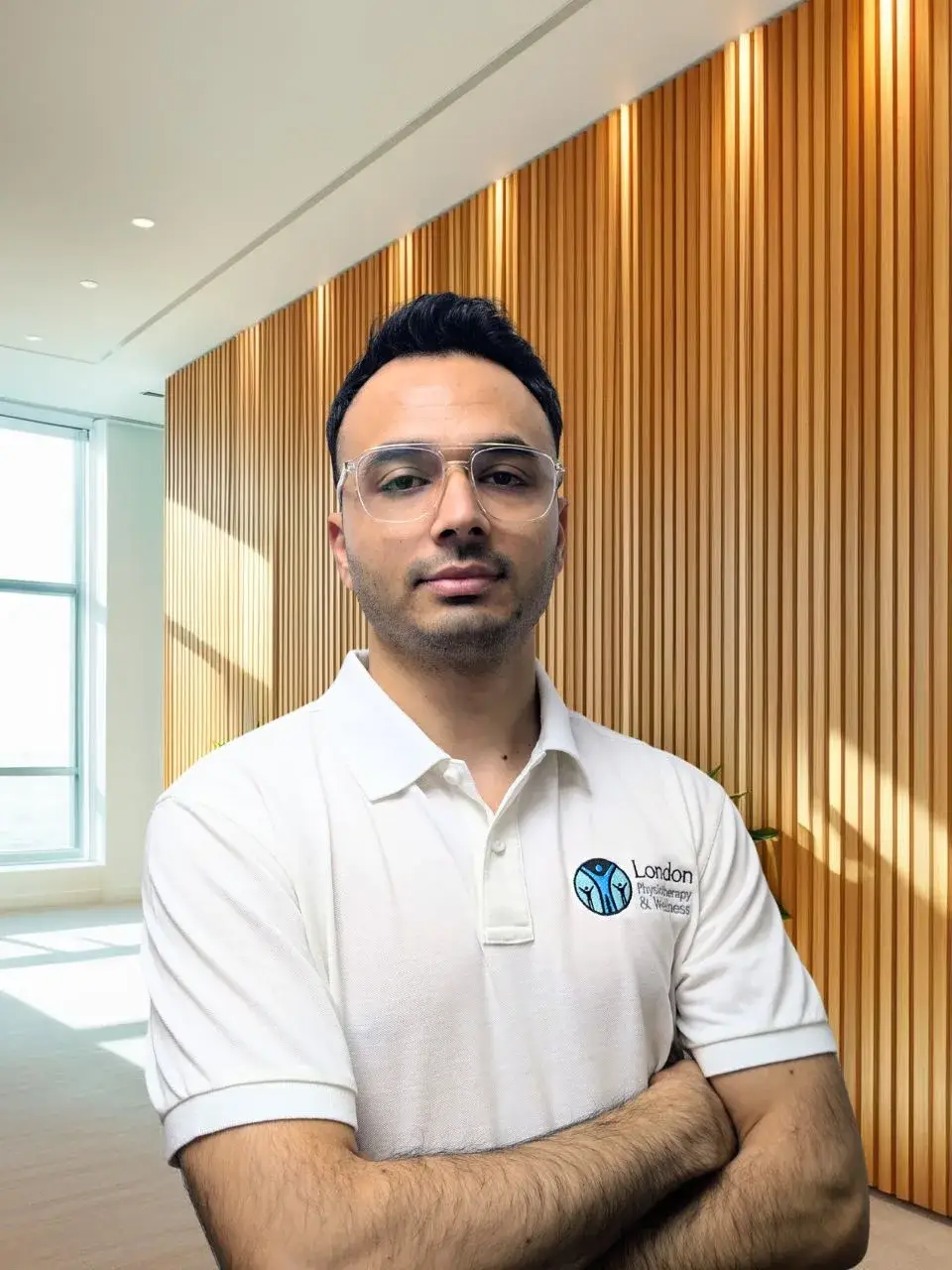
LPAW’s clinical team includes 19 practitioners, many holding postgraduate qualifications from UCL, King’s College London, and Guy’s and St Thomas’. Lead clinician Mr Arjun Viswanath MSc, MCSP, MPPA – Co-Founder and Consultant Physiotherapist – brings 25+ years of NHS and private experience including BMI London Independent Hospital and Harley Street.
Every clinician joining LPAW completes a mandatory intensive shadowing placement with our Consultant Physiotherapist before seeing patients independently. This is not a standard practice at most clinics – it’s our way of maintaining clinical consistency across the team.
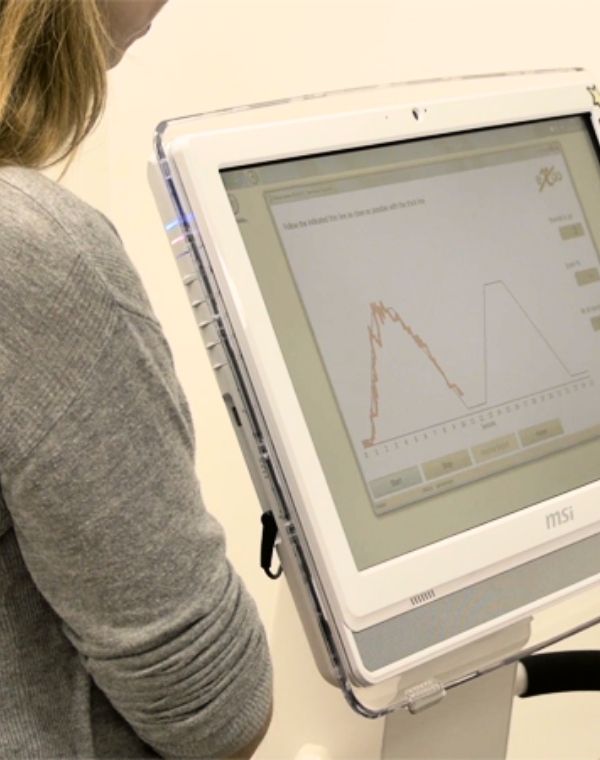
For patients with chronic lower back pain — particularly those who have not responded to standard physiotherapy — our Med-X Spinal Gym offers a treatment pathway unavailable elsewhere in East London. The Med-X Lower Lumbar Extension machine (“The Beast”) is a medical-grade rehabilitation device from the US with a specific evidence base for chronic lower back pain.
Unlike standard gym equipment, the Med-X isolates lumbar extensor musculature by fixing the pelvis, allowing targeted strengthening of the deep spinal extensors (multifidus) in a controlled, progressive way. Multiple peer-reviewed studies have demonstrated significant and durable pain reduction in chronic lower back pain following Med-X rehabilitation programmes.
The Med-X gym is also available via our membership plans for patients who benefit from ongoing use.
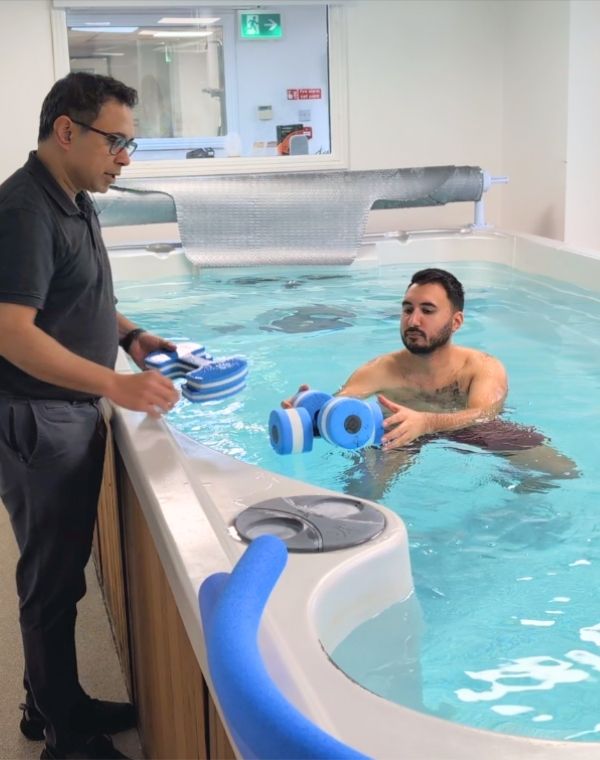
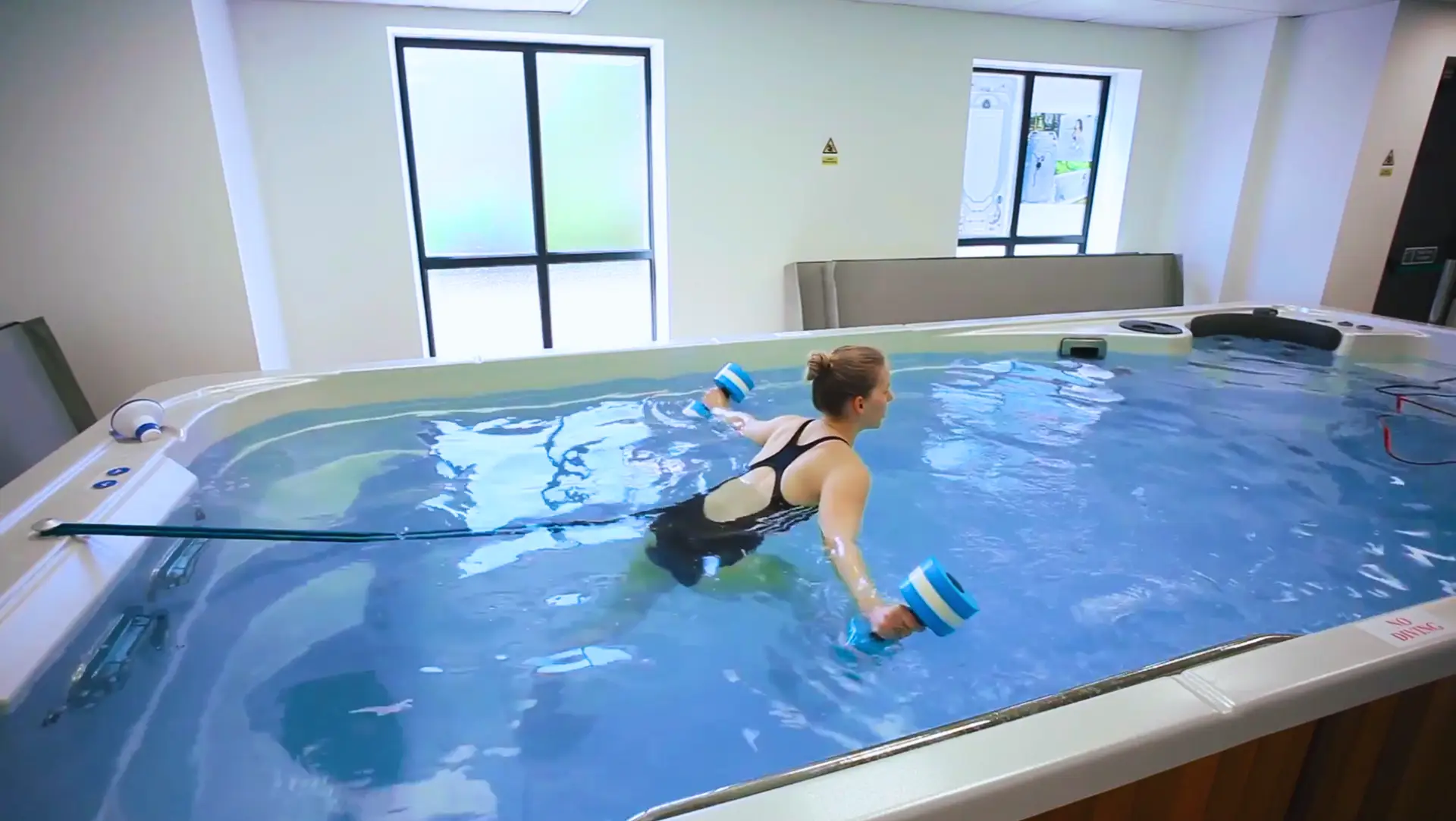
LPAW’s hydrotherapy pool — heated to 36°C — is invaluable for patients where back pain is severe enough to limit land-based exercise. The combination of buoyancy (reducing load on the spine) and warmth (reducing muscle spasm and improving circulation) allows movement and neural mobilisation exercises that are impossible or too painful on land. Hydrotherapy is particularly effective as an adjunct to Med-X rehabilitation for chronic back pain.
These are “red flags” that must be ruled out before physiotherapy treatment. Our physiotherapists conduct a full red flag screen at every initial assessment.
Most back pain is benign and responds to physiotherapy. However, certain features require urgent medical assessment. Seek immediate medical attention if you experience:
For patients with chronic lower back pain — particularly those who have not responded to standard physiotherapy — our Med-X Spinal Gym offers a treatment pathway unavailable elsewhere in East London. The Med-X Lower Lumbar Extension machine (“The Beast”) is a medical-grade rehabilitation device from the US with a specific evidence base for chronic lower back pain.
Unlike standard gym equipment, the Med-X isolates lumbar extensor musculature by fixing the pelvis, allowing targeted strengthening of the deep spinal extensors (multifidus) in a controlled, progressive way. Multiple peer-reviewed studies have demonstrated significant and durable pain reduction in chronic lower back pain following Med-X rehabilitation programmes.
The Med-X gym is also available via our membership plans for patients who benefit from ongoing use.
LPAW’s hydrotherapy pool — heated to 36°C — is invaluable for patients where back pain is severe enough to limit land-based exercise. The combination of buoyancy (reducing load on the spine) and warmth (reducing muscle spasm and improving circulation) allows movement and neural mobilisation exercises that are impossible or too painful on land. Hydrotherapy is particularly effective as an adjunct to Med-X rehabilitation for chronic back pain.


What We Do