



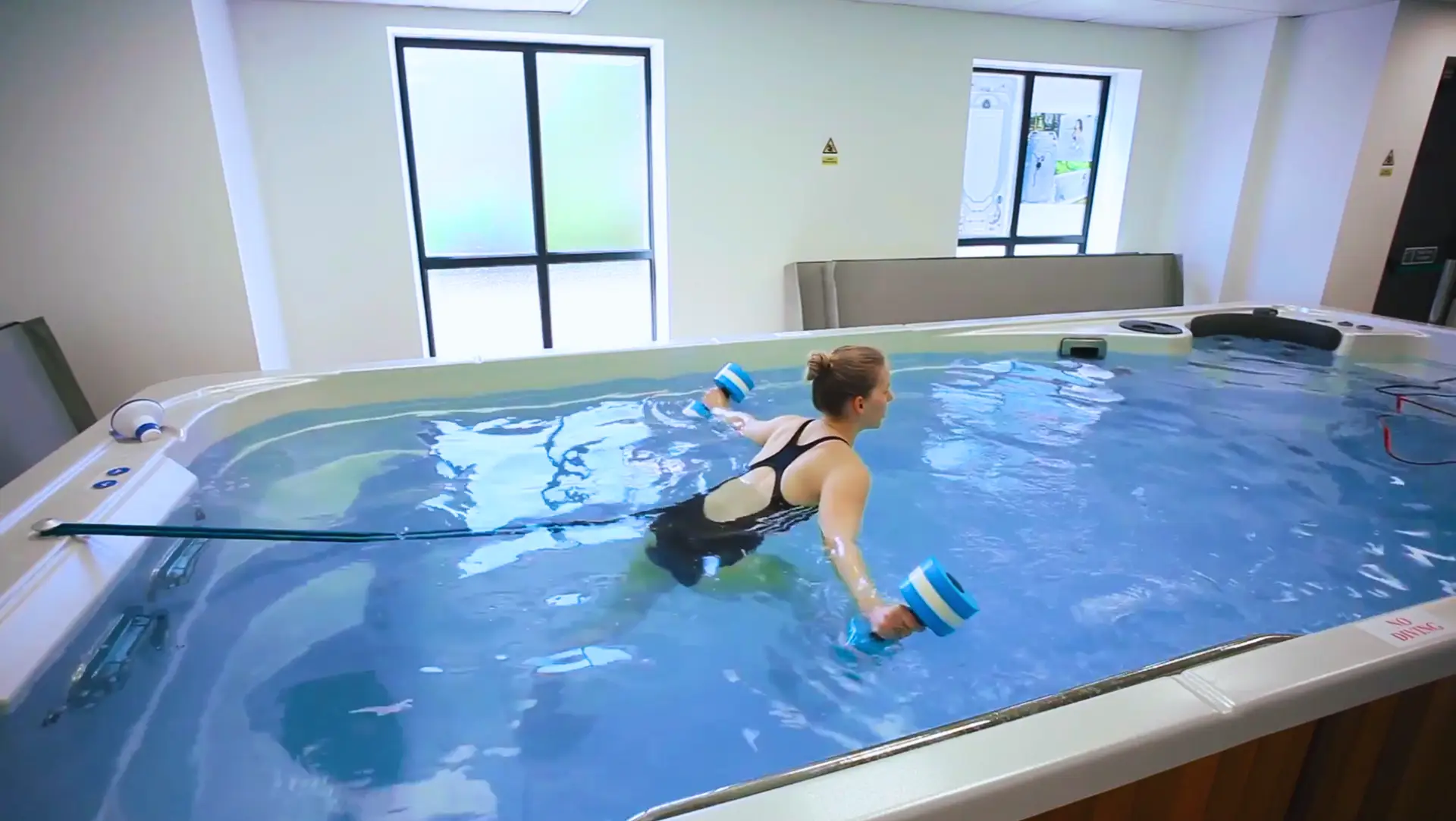
The main LPAW clinic is in Bow, E3, London, right next to The Bow Quarter. This bright and spacious clinic offers 4 treatment rooms, 2 changing rooms with showers, a large rehab gym, & onsite hydrotherapy in our 17 foot pool.
The LPAW satellite clinic is based in Stratford East Village where we run a thriving sports rehab offering.
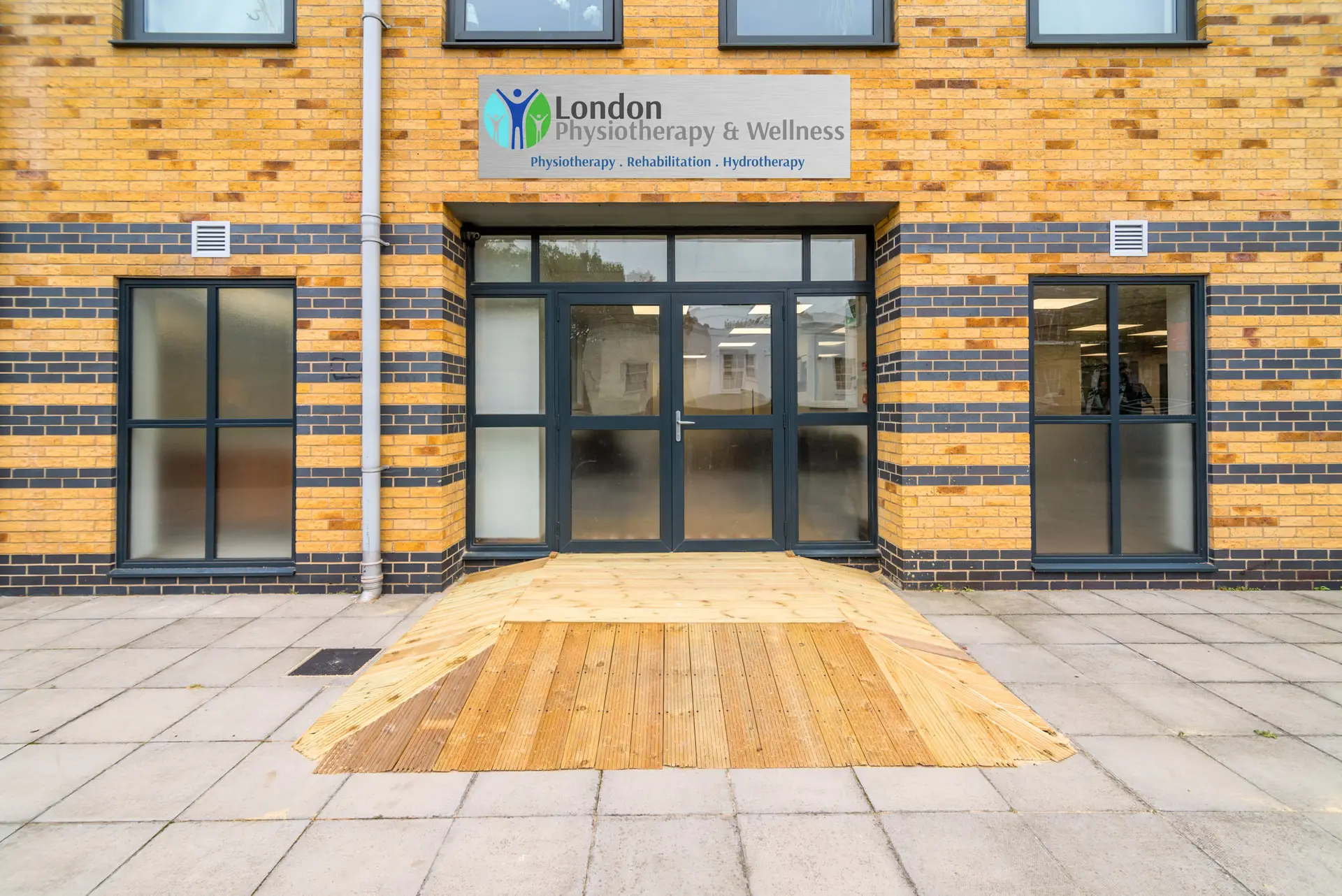
The main LPAW clinic is in Bow, E3, London, right next to The Bow Quarter. This bright and spacious clinic offers 4 treatment rooms, 2 changing rooms with showers, a large rehab gym, & onsite hydrotherapy in our 17 foot pool.
The LPAW satellite clinic is based in Stratford East Village where we run a thriving sports rehab offering.
In most physiotherapy clinics, chronic back pain rehabilitation means a set of standard exercises on a mat and some advice about posture. At LPAW, it means access to the Med-X Spinal Gym — a range of medical-grade rehabilitation equipment from the United States, with a specific clinical evidence base that most physiotherapy clinics in the UK cannot offer because they simply don’t have the machines.
The flagship piece is the Med-X Lower Lumbar Extension — a device our patients call “The Beast.” It does something no other piece of equipment in a standard physiotherapy clinic, gym, or fitness centre can do: it isolates the lumbar extensor muscles with true pelvic fixation, allowing targeted rehabilitation of the deep spinal stabilisers that are consistently found to atrophy in chronic lower back pain.
The Med-X Spinal Gym is available at our Bow clinic, and access is included in LPAW’s membership plans as well as within clinical treatment programmes.
To understand why Med-X matters, it helps to understand what goes wrong with the lumbar spine in chronic back pain — and why standard exercises often fall short.
The deep muscles of the lumbar spine — particularly multifidus and the lumbar extensors — are the primary stabilisers of the vertebral segments. They are small, intrinsic muscles that attach directly to individual vertebrae and regulate fine motor control of spinal movement.
In chronic lower back pain, these muscles consistently demonstrate two abnormalities:
This is not metaphorical. MRI imaging in chronic back pain patients consistently shows fatty infiltration and reduced cross-sectional area of multifidus at symptomatic spinal levels. The muscle physically wastes.
The challenge for rehabilitation is this: the lumbar extensors cannot be effectively isolated by conventional exercises. When performing standard exercises — deadlifts, back extensions on a Roman chair, good mornings — the pelvis is free to move. The body compensates by rotating the pelvis to reduce the range of motion required of the lumbar spine, shifting load to the hip extensors (gluteals and hamstrings) and away from the lumbar extensors. The very muscles you are trying to strengthen are the ones least engaged.
The Med-X machine solves this problem directly.
The Med-X Spinal Gym is appropriate for a wide range of patients. It is particularly valuable for:
Chronic lower back pain — particularly patients who have not responded adequately to standard physiotherapy, or who have demonstrable lumbar extensor weakness and atrophy. This is the primary indication the machine was designed and studied for.
Sciatica and disc issues — after the acute phase resolves, the residual lumbar deconditioning that follows disc injury is one of the strongest drivers of recurrence. Med-X rehabilitation addresses this directly.
Neck pain — chronic cervical pain with cervical extensor weakness; post-whiplash; cervical radiculopathy in recovery.
Post-surgical spinal rehabilitation — following discectomy, spinal fusion, or decompression surgery. The Med-X allows progressive loading of the spinal extensors in a controlled environment during the critical rebuilding phase.
Hip and knee replacement patients — the hip extension machine contributes to posterior chain strengthening as part of post-surgical rehabilitation.
Athletes and elite performers — the Med-X is used in elite sports settings in the US for lumbar extensor conditioning as injury prevention and performance enhancement. LPAW’s sports therapy patients use the gym as part of advanced rehabilitation programmes.
Older adults maintaining spinal health — the progressive, measurable nature of Med-X training makes it an excellent tool for maintaining lumbar strength and function in ageing, where spinal extensor atrophy accelerates.
The Med-X Lower Lumbar Extension seats the patient in a reclined position. The critical innovation is the pelvic restraint system: a precisely calibrated restraint that fixes the pelvis completely, eliminating pelvic rotation and hip extensor compensation.
With the pelvis fixed, the only movement available is lumbar extension — driven exclusively by the lumbar extensor muscles. There is no compensation pathway. The multifidus and lumbar extensors must work.
The machine allows precise measurement of both the test position and the training load. Testing protocols assess lumbar extension strength across the full range of motion and at specific angles. Treatment protocols apply progressive resistance to build strength through the same range.
The result: Targeted strengthening of the lumbar extensors that is impossible to replicate with any other equipment.
The Med-X system has an evidence base spanning more than two decades of published research. Key studies include:
Risch et al. (1993): A randomised controlled trial published in Spine found that isolated lumbar extension training using Med-X produced a 150% improvement in lumbar extension strength and a significant reduction in pain and disability in chronic lower back pain patients, compared to controls.
Nelson et al. (1995): Demonstrated that Med-X lumbar extension rehabilitation produced durable pain reduction and functional improvement at 12-month follow-up.
Rainville et al. (2004): Spine — confirmed the superiority of isolated lumbar extension training over general exercise for chronic lower back pain with demonstrated lumbar extensor weakness.
Multiple subsequent studies have replicated the finding that isolated lumbar extension training — which the Med-X machine uniquely enables — produces clinically meaningful and sustained improvement in chronic lower back pain.
This is not modest evidence. It is one of the most robustly studied non-surgical interventions for chronic lower back pain in the physiotherapy literature
To understand why Med-X matters, it helps to understand what goes wrong with the lumbar spine in chronic back pain — and why standard exercises often fall short.
The deep muscles of the lumbar spine — particularly multifidus and the lumbar extensors — are the primary stabilisers of the vertebral segments. They are small, intrinsic muscles that attach directly to individual vertebrae and regulate fine motor control of spinal movement.
In chronic lower back pain, these muscles consistently demonstrate two abnormalities:
This is not metaphorical. MRI imaging in chronic back pain patients consistently shows fatty infiltration and reduced cross-sectional area of multifidus at symptomatic spinal levels. The muscle physically wastes.
The challenge for rehabilitation is this: the lumbar extensors cannot be effectively isolated by conventional exercises. When performing standard exercises — deadlifts, back extensions on a Roman chair, good mornings — the pelvis is free to move. The body compensates by rotating the pelvis to reduce the range of motion required of the lumbar spine, shifting load to the hip extensors (gluteals and hamstrings) and away from the lumbar extensors. The very muscles you are trying to strengthen are the ones least engaged.
The Med-X machine solves this problem directly.
The Med-X Spinal Gym is appropriate for a wide range of patients. It is particularly valuable for:
Chronic lower back pain — particularly patients who have not responded adequately to standard physiotherapy, or who have demonstrable lumbar extensor weakness and atrophy. This is the primary indication the machine was designed and studied for.
Sciatica and disc issues — after the acute phase resolves, the residual lumbar deconditioning that follows disc injury is one of the strongest drivers of recurrence. Med-X rehabilitation addresses this directly.
Neck pain — chronic cervical pain with cervical extensor weakness; post-whiplash; cervical radiculopathy in recovery.
Post-surgical spinal rehabilitation — following discectomy, spinal fusion, or decompression surgery. The Med-X allows progressive loading of the spinal extensors in a controlled environment during the critical rebuilding phase.
Hip and knee replacement patients — the hip extension machine contributes to posterior chain strengthening as part of post-surgical rehabilitation.
Athletes and elite performers — the Med-X is used in elite sports settings in the US for lumbar extensor conditioning as injury prevention and performance enhancement. LPAW’s sports therapy patients use the gym as part of advanced rehabilitation programmes.
Older adults maintaining spinal health — the progressive, measurable nature of Med-X training makes it an excellent tool for maintaining lumbar strength and function in ageing, where spinal extensor atrophy accelerates.
The Med-X Lower Lumbar Extension seats the patient in a reclined position. The critical innovation is the pelvic restraint system: a precisely calibrated restraint that fixes the pelvis completely, eliminating pelvic rotation and hip extensor compensation.
With the pelvis fixed, the only movement available is lumbar extension — driven exclusively by the lumbar extensor muscles. There is no compensation pathway. The multifidus and lumbar extensors must work.
The machine allows precise measurement of both the test position and the training load. Testing protocols assess lumbar extension strength across the full range of motion and at specific angles. Treatment protocols apply progressive resistance to build strength through the same range.
The result: Targeted strengthening of the lumbar extensors that is impossible to replicate with any other equipment.
The Med-X system has an evidence base spanning more than two decades of published research. Key studies include:
Risch et al. (1993): A randomised controlled trial published in Spine found that isolated lumbar extension training using Med-X produced a 150% improvement in lumbar extension strength and a significant reduction in pain and disability in chronic lower back pain patients, compared to controls.
Nelson et al. (1995): Demonstrated that Med-X lumbar extension rehabilitation produced durable pain reduction and functional improvement at 12-month follow-up.
Rainville et al. (2004): Spine — confirmed the superiority of isolated lumbar extension training over general exercise for chronic lower back pain with demonstrated lumbar extensor weakness.
Multiple subsequent studies have replicated the finding that isolated lumbar extension training — which the Med-X machine uniquely enables — produces clinically meaningful and sustained improvement in chronic lower back pain.
This is not modest evidence. It is one of the most robustly studied non-surgical interventions for chronic lower back pain in the physiotherapy literature
LPAW’s clinical team includes 19 practitioners, many holding postgraduate qualifications from UCL, King’s College London, and Guy’s and St Thomas’. Lead clinician Mr Arjun Viswanath MSc, MCSP, MPPA – Co-Founder and Consultant Physiotherapist – brings 25+ years of NHS and private experience including BMI London Independent Hospital and Harley Street.
Every clinician joining LPAW completes a mandatory intensive shadowing placement with our Consultant Physiotherapist before seeing patients independently. This is not a standard practice at most clinics – it’s our way of maintaining clinical consistency across the team.


No. This is the most important distinction. Standard back extension machines (Roman chairs, GHD machines) allow the pelvis to move. Pelvic movement means the hip extensors compensate, and the lumbar extensors — the muscles you are trying to train — are not effectively isolated. The Med-X fixes the pelvis completely, eliminating this compensation. No standard gym equipment achieves this. It is the defining feature of the Med-X system.
With appropriate assessment and programme parameters, yes. The Med-X is used for patients with disc-related back pain — typically after the acute phase has resolved. The range of motion and load are precisely controlled, and the machine does not apply shear or flexion forces to the spine. Your physiotherapist will determine the appropriate starting parameters for your specific presentation.
In many cases, yes — typically from 6–12 weeks post-operatively, depending on the procedure and your surgeon’s protocol. Post-surgical lumbar deconditioning is a significant challenge, and the Med-X is one of the most effective tools for rebuilding the extensor musculature after surgery. Your physiotherapist will liaise with your surgical team regarding the appropriate timeline.
Most patients notice meaningful improvement in pain and strength within 8–12 sessions. The landmark Risch et al. study used a 10-week protocol with 2–3 sessions per week. Clinical experience at LPAW supports this timeline — patients often report significant change within the first 6–8 sessions, with ongoing improvement through a full course.
The Med-X Spinal Gym is located at our Bow flagship clinic only — 46–52 Fairfield Road, Bow, London E3 2QA. It is not available at the Stratford East Village site.
An initial assessment with an LPAW physiotherapist is required before accessing the Med-X. This establishes whether the equipment is appropriate for you, determines your baseline, and sets your programme parameters safely. After assessment, you can access the gym via a clinical programme or Flex membership.
Your first Med-X session is always preceded by a clinical assessment with an LPAW physiotherapist, who will:
Subsequent sessions can be supervised by your physiotherapist within a treatment plan, or conducted independently on the Flex membership programme with periodic review.
Sessions are typically 20–40 minutes, depending on the number of machines included in your programme.
LPAW’s Bow clinic houses the full Med-X range for spinal rehabilitation:
Med-X Lower Lumbar Extension (“The Beast”) The flagship machine. Seated, pelvis-fixed lumbar extension training. The primary tool for chronic lower back pain rehabilitation and lumbar extensor atrophy.

Med-X Cervical Extension An equivalent device for the cervical spine — fixing the thoracic spine while isolating the cervical extensors. Used for chronic neck pain, cervical instability following whiplash, and post-surgical cervical rehabilitation. The deep cervical extensors (semispinalis cervicis, multifidus) demonstrate the same atrophy pattern as the lumbar extensors in chronic neck pain — and the same evidence supports targeted strengthening.

Med-X Torso Rotation Targets the rotational stabilisers of the lumbar spine — the obliques and rotational multifidus — which are important for rotational movement control and spinal stability during everyday activities and sport.
Med-X Hip Extension Targeted hip extension strengthening for patients with hip extensor weakness contributing to lower back pain, hip conditions, or post-surgical rehabilitation.
Unlike most clinical equipment, access to the Med-X Spinal Gym at LPAW is available on a membership basis — not only within supervised physiotherapy treatment sessions.
For patients who have completed an initial clinical assessment and programme familiarisation, Flex membership provides ongoing access to the Med-X gym for self-directed training, supervised by LPAW staff. This is particularly valuable for:
See Memberships for details on Flex membership options and pricing.

Your first Med-X session is always preceded by a clinical assessment with an LPAW physiotherapist, who will:
Subsequent sessions can be supervised by your physiotherapist within a treatment plan, or conducted independently on the Flex membership programme with periodic review.
Sessions are typically 20–40 minutes, depending on the number of machines included in your programme.
LPAW’s Bow clinic houses the full Med-X range for spinal rehabilitation:
Med-X Lower Lumbar Extension (“The Beast”) The flagship machine. Seated, pelvis-fixed lumbar extension training. The primary tool for chronic lower back pain rehabilitation and lumbar extensor atrophy.
Med-X Cervical Extension An equivalent device for the cervical spine — fixing the thoracic spine while isolating the cervical extensors. Used for chronic neck pain, cervical instability following whiplash, and post-surgical cervical rehabilitation. The deep cervical extensors (semispinalis cervicis, multifidus) demonstrate the same atrophy pattern as the lumbar extensors in chronic neck pain — and the same evidence supports targeted strengthening.
Med-X Torso Rotation Targets the rotational stabilisers of the lumbar spine — the obliques and rotational multifidus — which are important for rotational movement control and spinal stability during everyday activities and sport.
Med-X Hip Extension Targeted hip extension strengthening for patients with hip extensor weakness contributing to lower back pain, hip conditions, or post-surgical rehabilitation.
Unlike most clinical equipment, access to the Med-X Spinal Gym at LPAW is available on a membership basis — not only within supervised physiotherapy treatment sessions.
For patients who have completed an initial clinical assessment and programme familiarisation, Flex membership provides ongoing access to the Med-X gym for self-directed training, supervised by LPAW staff. This is particularly valuable for:
See Memberships for details on Flex membership options and pricing.