


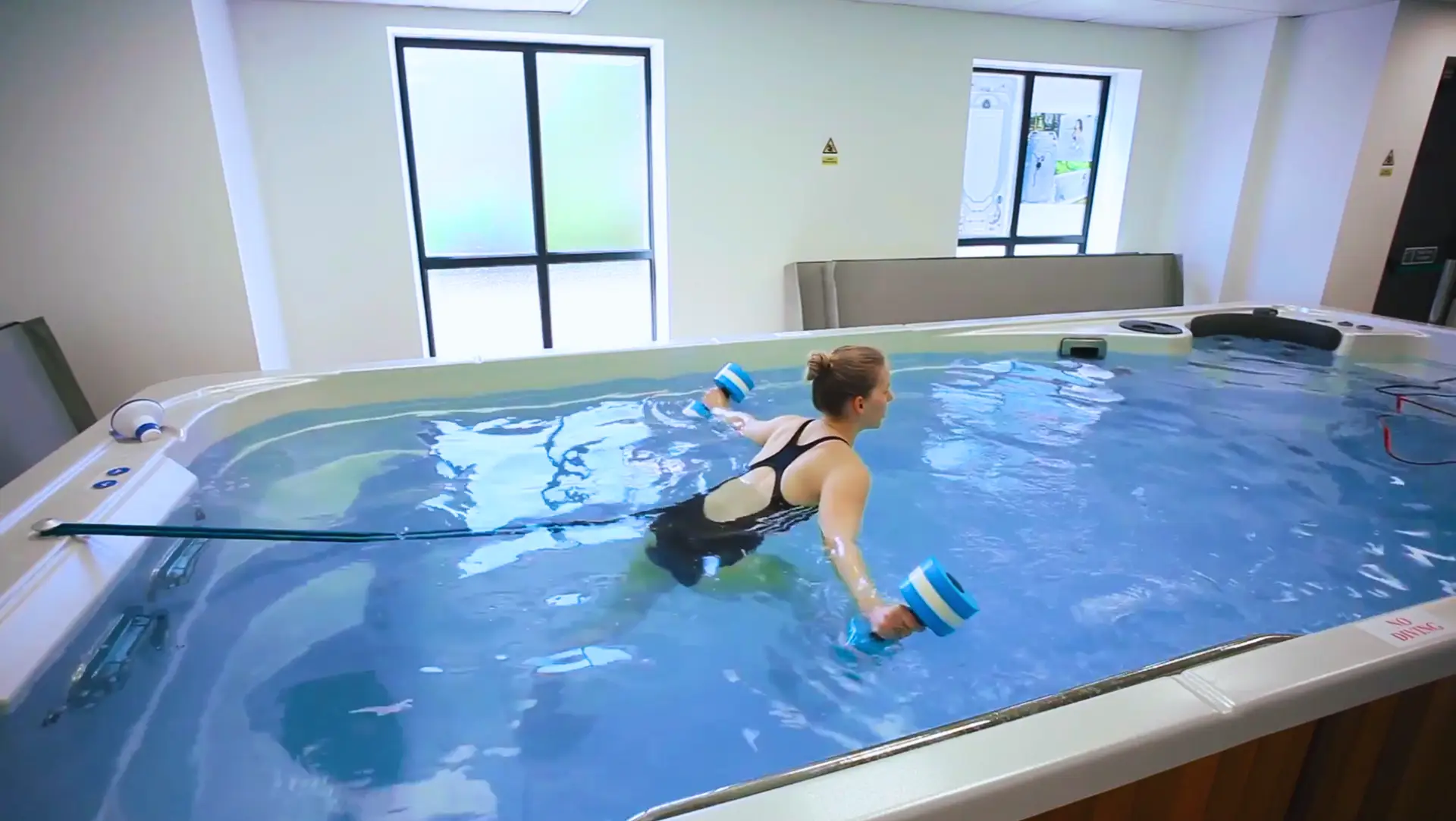
The main LPAW clinic is in Bow, E3, London, right next to The Bow Quarter. This bright and spacious clinic offers 4 treatment rooms, 2 changing rooms with showers, a large rehab gym, & onsite hydrotherapy in our 17 foot pool.
The LPAW satellite clinic is based in Stratford East Village where we run a thriving sports rehab offering.
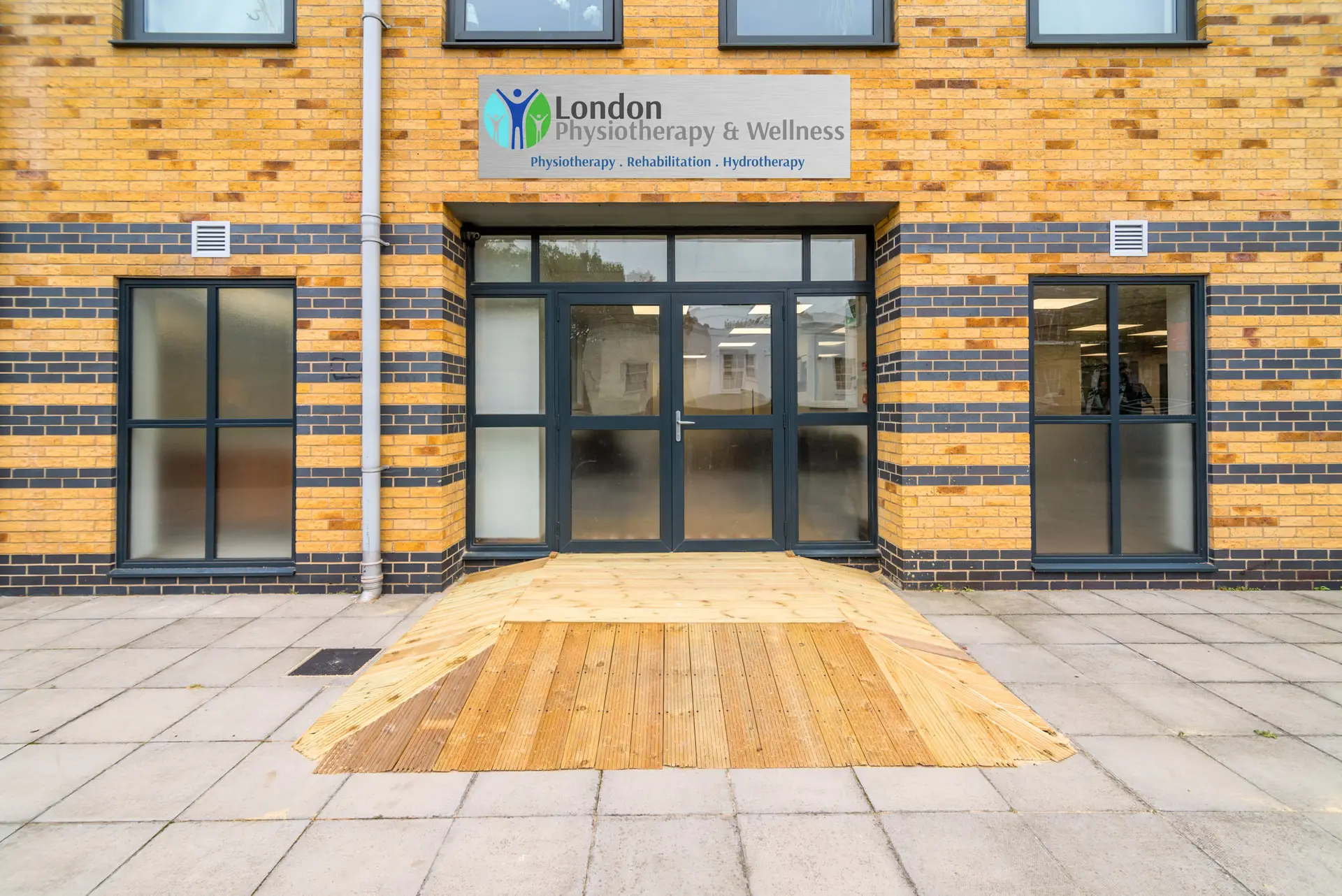
The main LPAW clinic is in Bow, E3, London, right next to The Bow Quarter. This bright and spacious clinic offers 4 treatment rooms, 2 changing rooms with showers, a large rehab gym, & onsite hydrotherapy in our 17 foot pool.
The LPAW satellite clinic is based in Stratford East Village where we run a thriving sports rehab offering.
Whether you’re training for your first 5K, targeting a marathon PB, or trying to understand why you keep getting injured every time your mileage climbs, a running assessment at LPAW will give you clear, actionable answers. Our physiotherapists combine biomechanical gait analysis with clinical assessment to identify the underlying causes of running injuries — and build a programme to fix them.
Running assessments are available at our Bow and Stratford East Village clinics.
1. Clinical History & Injury Assessment
We begin with a detailed discussion about your training background, injury history, current symptoms (if applicable), weekly mileage, race goals, and footwear. If you are attending with an injury, this also includes a full physiotherapy assessment alongside the gait analysis.
2. Musculoskeletal Screening
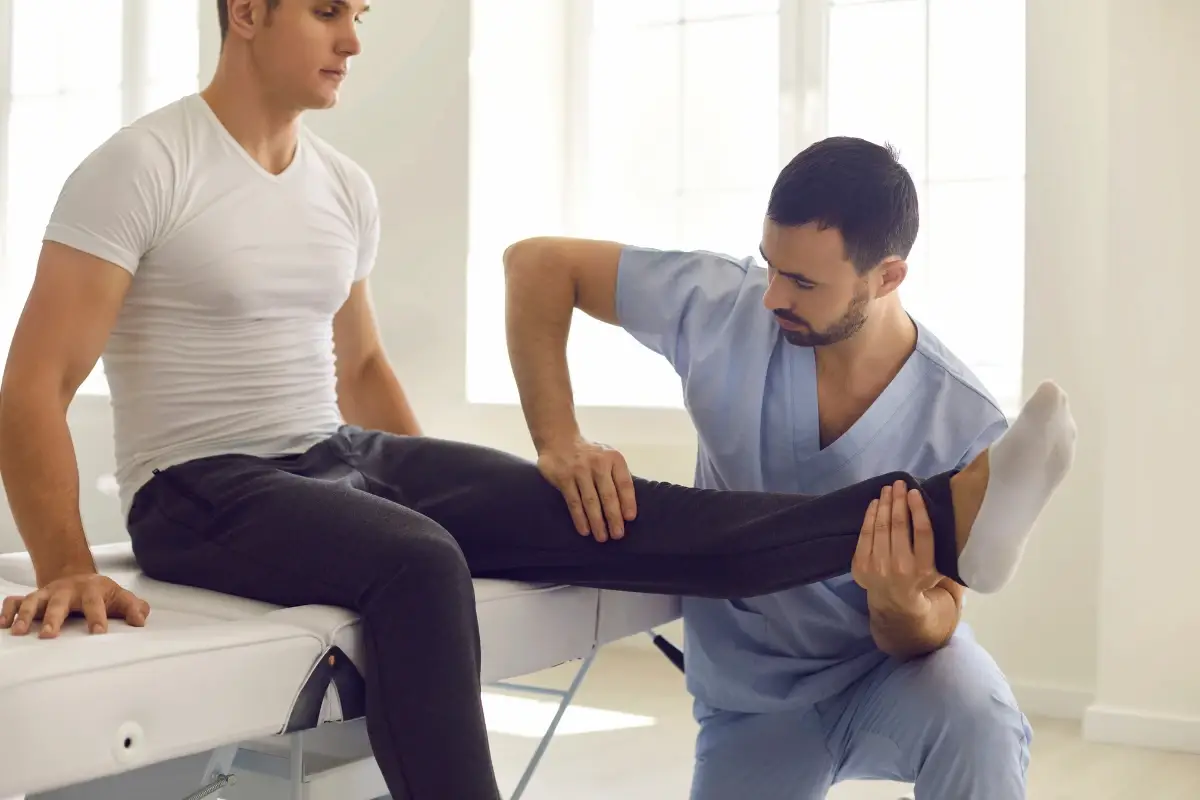
We carry out a physical assessment of the key areas that influence running mechanics, including hip flexor and calf flexibility, glute and hip abductor strength, single-leg balance and proprioception, pelvic control, and spinal mobility. This helps identify the muscle imbalances, movement restrictions, and weaknesses that commonly contribute to inefficient running mechanics and injury.
3. Running Gait Analysis
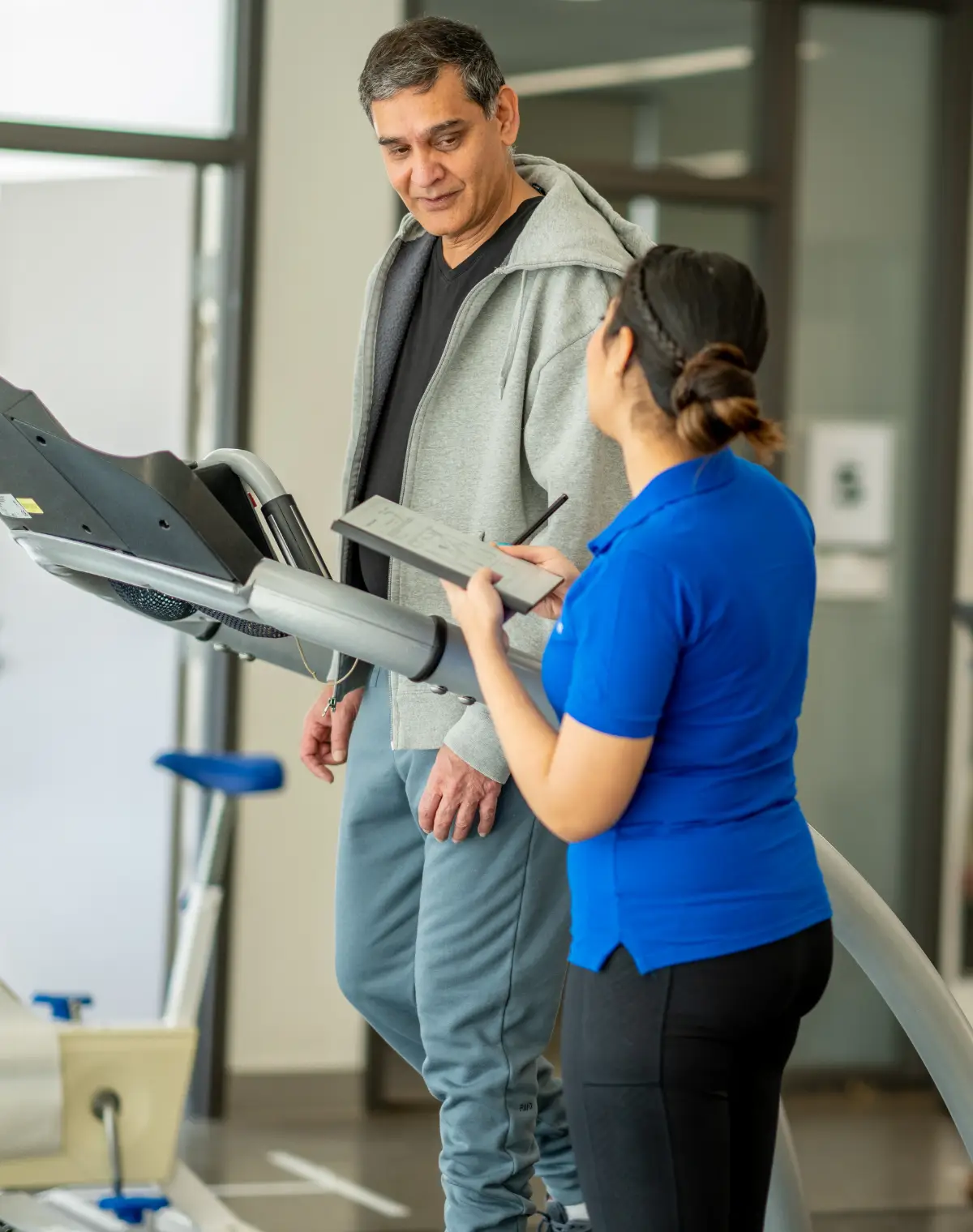
You will run on the treadmill (please bring your running shoes and appropriate kit) while we film your gait from the front, side, and rear views. The footage is analysed both in real time and in slow motion to assess foot strike pattern and contact point, cadence, trunk and pelvic position, hip drop and knee alignment during loading, arm carriage, and forward lean.
4. Footwear Assessment
Your current running shoes will be assessed for wear patterns, fit, and suitability. Where appropriate, we will provide evidence-based footwear recommendations. Importantly, we do not sell running shoes, so all advice is entirely clinically driven rather than commercially motivated.
5. Findings & Personalised Programme
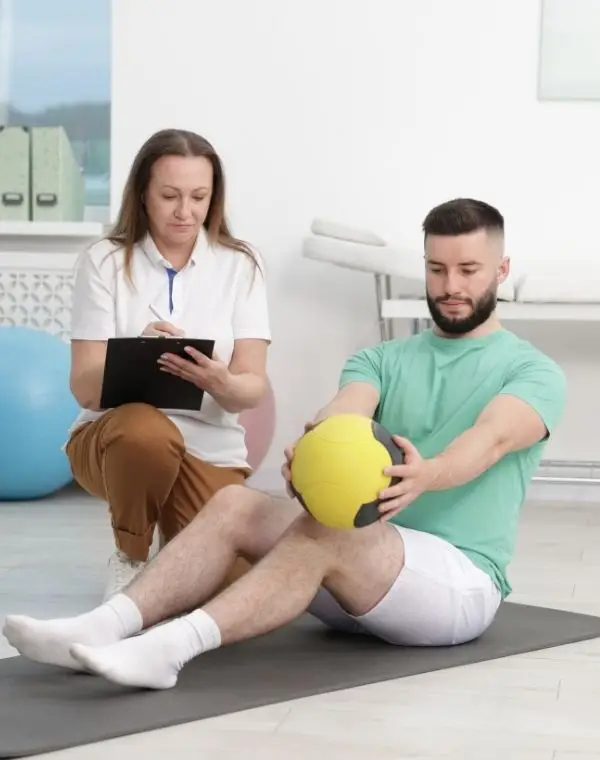
At the end of the session, we will clearly explain our findings and discuss how they relate to your running performance or injury concerns. You will leave with a personalised, running-specific exercise programme designed to address the specific weaknesses and movement patterns identified during the assessment. Where appropriate, this may also include a graduated return-to-running plan.
A running assessment is particularly valuable for the following conditions:
Runner’s knee (patellofemoral pain syndrome) is commonly associated with pelvic drop, overstriding, and hip weakness, all of which can significantly affect running mechanics and load distribution.
Shin splints (medial tibial stress syndrome) are often linked to overpronation, rapid increases in weekly mileage, and reduced hip or calf strength, leading to excessive stress through the lower leg.
Achilles tendinopathy frequently develops through a combination of training load errors and inefficient biomechanical loading patterns during running.

IT band syndrome is commonly driven by poor pelvic control and weakness in the hip abductors, which can alter lower limb alignment during stance phase.
Plantar fasciitis is often influenced by foot strike mechanics, calf flexibility, and overall loading through the foot and ankle complex.
Hamstring strain is frequently associated with hip flexor dominance, reduced glute strength, and poor posterior chain control.
Stress fractures can result from excessive impact loading and training errors. A running assessment can help identify contributing biomechanical factors and guide appropriate load management alongside medical care.
For chronic running-related tendon injuries where assessment and rehabilitation haven’t fully resolved the problem, shockwave therapy is available at LPAW and is particularly effective for Achilles tendinopathy and plantar fasciitis.
If you’re building towards a specific event — a marathon, half marathon, triathlon, or ultra — a running assessment as part of your preparation can be transformative. We help you:
LPAW works with runners at all levels, from first-timers to those targeting qualifying times. We are also a clinic partner of ESBI, a running club community in East London — runners referred through ESBI receive the same clinical standards as all LPAW patients.
Running looks simple. Biomechanically, it is not. Each running stride places a ground reaction force of 2–3 times body weight through the foot, ankle, knee, hip, and spine. Small biomechanical deviations — a slight foot crossover, excessive hip drop, forward trunk lean — multiply over thousands of footstrikes and become the cumulative cause of most running injuries.
Most running injuries are not bad luck. They are predictable, and many are preventable with the right assessment and correction.
The most common biomechanical contributors to running injury:
A running assessment identifies which of these factors are relevant to you specifically — not which factors appear in a generic biomechanics textbook.
A running assessment at LPAW is a full clinical and biomechanical evaluation, not just a treadmill video. It includes:
1. Clinical History and Injury Analysis We begin by understanding your training history, injury history, current complaints (if any), mileage, race goals, and footwear. If you are presenting with an injury, this is a full physiotherapy assessment as well as a gait analysis.
2. Musculoskeletal Screen A physical assessment of the key structures that influence running mechanics: hip flexor and calf flexibility, hip abductor and glute strength, single-leg balance and proprioception, pelvic control, and spinal mobility. This identifies the muscle imbalances and weaknesses that typically drive poor running mechanics.
3. Gait Analysis You run on the treadmill (please bring your running shoes and appropriate kit). We film your gait from the front, rear, and side to analyse in real time and in slow motion. We assess:
4. Footwear Review We will assess your current running shoes for wear patterns and suitability, and make evidence-based recommendations where relevant. Note that we do not sell shoes — our advice is clinically motivated, not commercially motivated.
5. Findings, Explanation, and Programme At the end of the session, you will receive a clear verbal explanation of what we found and why it matters. You will leave with a personalised running-specific exercise programme targeting the specific weaknesses and movement faults identified — and where appropriate, a graduated return-to-running plan.
For chronic running-related tendon injuries where assessment and rehabilitation haven’t fully resolved the problem, shockwave therapy is available at LPAW Bow and is particularly effective for Achilles tendinopathy and plantar fasciitis.
If you’re building towards a specific event — a marathon, half marathon, triathlon, or ultra — a running assessment as part of your preparation can be transformative. We help you:
LPAW works with runners at all levels, from first-timers to those targeting qualifying times. We are also a clinic partner of ESBI, a running club community in East London — runners referred through ESBI receive the same clinical standards as all LPAW patients.
Running looks simple. Biomechanically, it is not. Each running stride places a ground reaction force of 2–3 times body weight through the foot, ankle, knee, hip, and spine. Small biomechanical deviations — a slight foot crossover, excessive hip drop, forward trunk lean — multiply over thousands of footstrikes and become the cumulative cause of most running injuries.
Most running injuries are not bad luck. They are predictable, and many are preventable with the right assessment and correction.
The most common biomechanical contributors to running injury:
A running assessment identifies which of these factors are relevant to you specifically — not which factors appear in a generic biomechanics textbook.
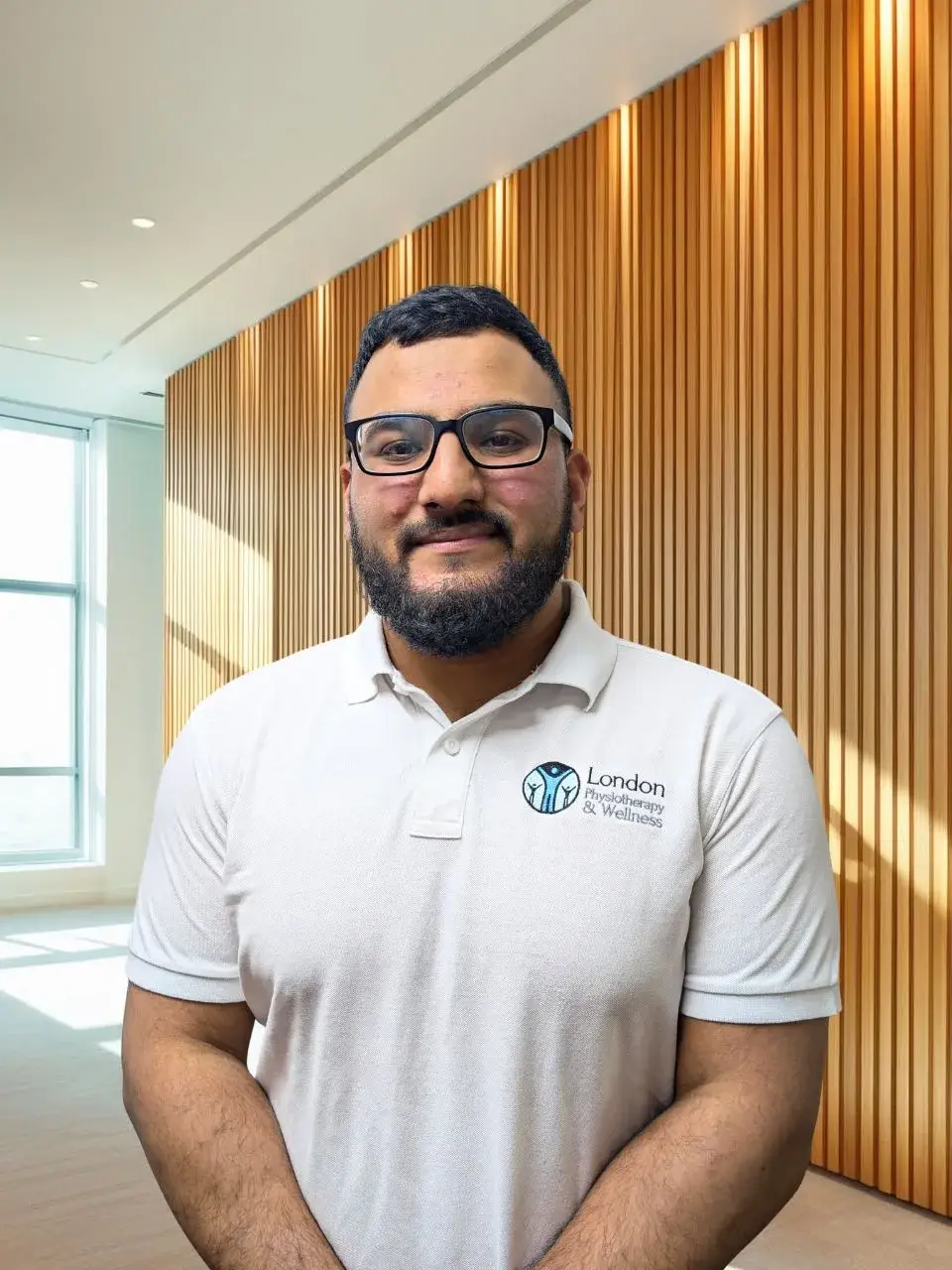
LPAW’s clinical team includes 19 practitioners, many holding postgraduate qualifications from UCL, King’s College London, and Guy’s and St Thomas’. Lead clinician Mr Arjun Viswanath MSc, MCSP, MPPA – Co-Founder and Consultant Physiotherapist – brings 25+ years of NHS and private experience including BMI London Independent Hospital and Harley Street.
Every clinician joining LPAW completes a mandatory intensive shadowing placement with our Consultant Physiotherapist before seeing patients independently. This is not a standard practice at most clinics – it’s our way of maintaining clinical consistency across the team.


Running assessments at LPAW connect directly with sports therapy, physiotherapy, shockwave therapy (for Achilles and plantar fasciitis), and dry needling. If your assessment identifies an injury needing treatment, we can start the same session.

If you’re returning after injury or surgery — ACL reconstruction, meniscus repair, or hip surgery — we use objective return-to-running criteria including hop tests and single-leg strength symmetry before clearing you to run again.
Running assessments at LPAW connect directly with sports therapy, physiotherapy, shockwave therapy (for Achilles and plantar fasciitis), and dry needling. If your assessment identifies an injury needing treatment, we can start the same session.
If you’re returning after injury or surgery — ACL reconstruction, meniscus repair, or hip surgery — we use objective return-to-running criteria including hop tests and single-leg strength symmetry before clearing you to run again.