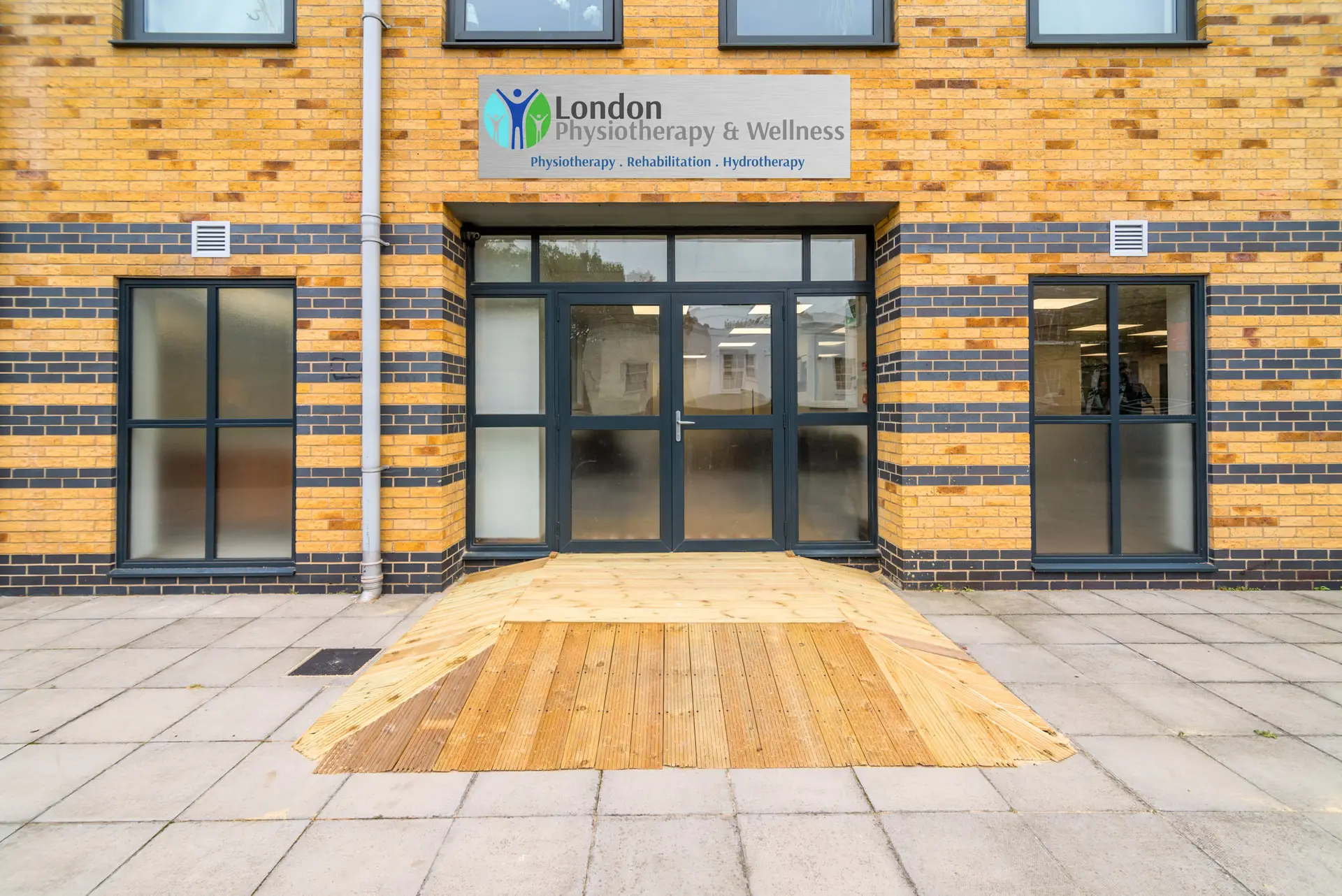
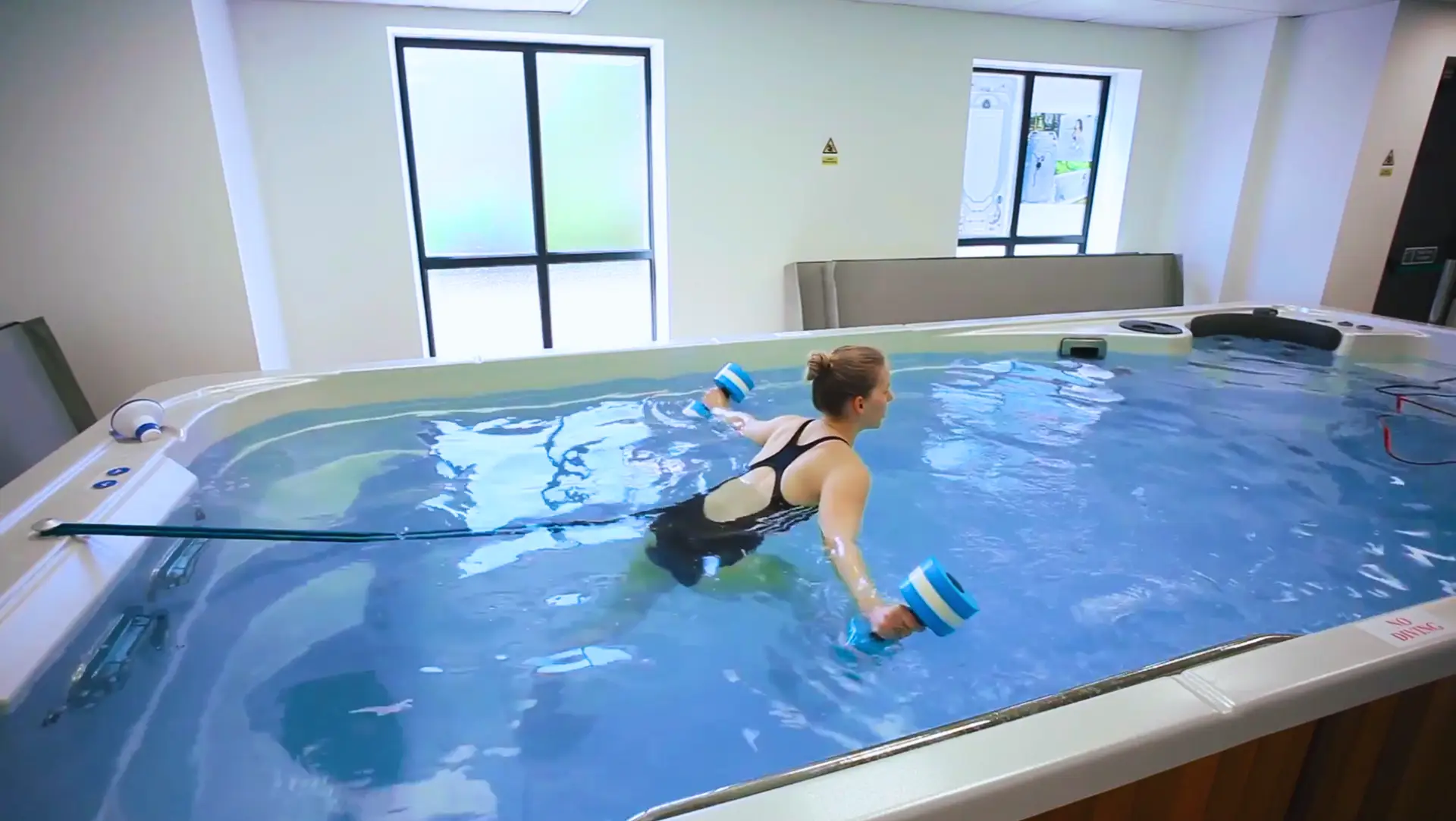
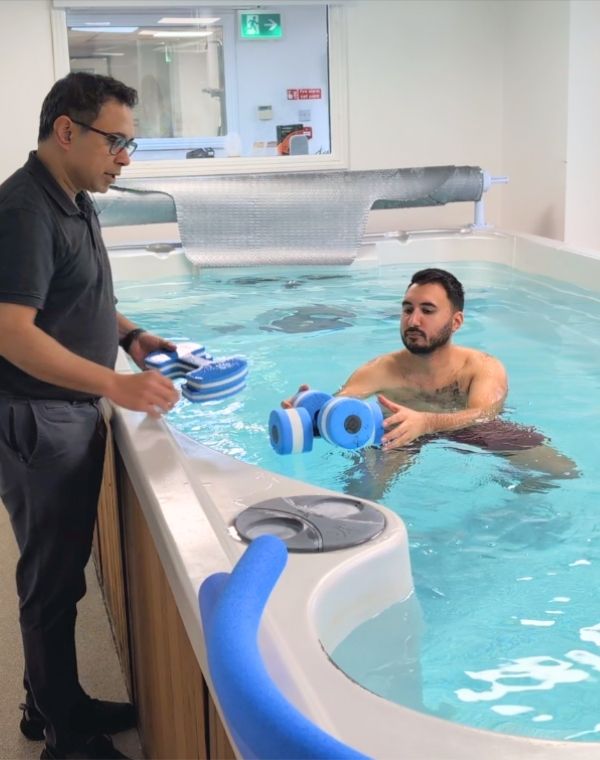
The main LPAW clinic is in Bow, E3, London, right next to The Bow Quarter. This bright and spacious clinic offers 4 treatment rooms, 2 changing rooms with showers, a large rehab gym, & onsite hydrotherapy in our 17 foot pool.
The LPAW satellite clinic is based in Stratford East Village where we run a thriving sports rehab offering.
The main LPAW clinic is in Bow, E3, London, right next to The Bow Quarter. This bright and spacious clinic offers 4 treatment rooms, 2 changing rooms with showers, a large rehab gym, & onsite hydrotherapy in our 17 foot pool.
The LPAW satellite clinic is based in Stratford East Village where we run a thriving sports rehab offering.
Surgery is only half the equation. The quality of your rehabilitation before and after the procedure has a profound impact on how completely and quickly you recover. At LPAW we have a 36°C hydrotherapy pool and Med-X Spinal Gym — facilities most clinics don’t have. Available at our Bow and Stratford East Village clinics.
The concept of prehabilitation, physiotherapy in the weeks before surgery to prepare the body, is supported by strong evidence. A 2017 systematic review in the British Journal of Anaesthesia found that patients who completed prehabilitation before total knee replacement had significantly better post-operative outcomes, including:
The principle is straightforward: patients who go into surgery with stronger muscles, better range of motion, and higher physical confidence tend to recover faster. Surgery does not create fitness — it temporarily reduces it. Your starting point matters.
Post-operative rehabilitation at LPAW follows a phased framework aligned with your surgical protocol. We work directly with your surgical team’s guidelines including weight-bearing precautions, range of motion targets, and activity restrictions set by your consultant.
Phase 1 Early Post-Operative (Weeks 1–6)
Goals: Manage pain and swelling, achieve safe weight bearing, restore baseline movement, and prevent complications.
Oedema management, elevation, compression, and gentle circulation exercises to reduce post-operative swelling.
Pain management, in collaboration with your surgical team’s analgesia plan.
Early mobility, walking with appropriate aids following surgeon-prescribed weight-bearing status.
Range of motion, gentle, progressive joint movement within post-operative limits.
Hydrotherapy (where appropriate)
Hydrotherapy can be especially helpful once the wound has healed and surgical clearance is given.
Buoyancy reduces load through the joint and allows easier movement
Warm water (around 36°C) reduces muscle spasm and stiffness
Water resistance supports early strengthening
Many patients feel more confident moving in water, improving early rehab engagement
Aquatic physiotherapy can support earlier functional recovery compared with land-based therapy alone in selected cases.
Phase 2 Rehabilitation (Weeks 6–16)
Goals: Restore normal gait, improve range of motion, build strength, and return to daily activities.
Progressive strengthening, gradual loading of the new joint to restore symmetry and function
Gait re-education, correcting compensatory movement patterns
Balance and proprioception training, improving stability and control of the replaced joint
Functional training, stairs, car transfers, and sit-to-stand movements
The Med-X Spinal Gym may be used for patients with associated spinal deconditioning due to prolonged reduced activity pre-surgery.
Phase 3 Return to Function (Months 3–12)
Goals: Return to full daily activities, recreation, and long-term independent management.
Higher-level strengthening, progression towards full functional loading
Activity-specific training, tailored to individual goals such as walking, cycling, swimming, or golf
Self-management programme, long-term exercise plan to maintain strength, mobility, and joint function

Most patients are discharged from hospital within 1–3 days of joint replacement surgery. LPAW can begin post-operative rehabilitation within the first week after discharge.
We work at your pace. Some patients progress quickly, while others need more time at each stage. Your physiotherapist will adjust the programme based on your presentation rather than a fixed timeline.
The concept of prehabilitation, physiotherapy in the weeks before surgery to prepare the body, is supported by strong evidence. A 2017 systematic review in the British Journal of Anaesthesia found that patients who completed prehabilitation before total knee replacement had significantly better post-operative outcomes, including:
The principle is straightforward: patients who go into surgery with stronger muscles, better range of motion, and higher physical confidence tend to recover faster. Surgery does not create fitness — it temporarily reduces it. Your starting point matters.
Post-operative rehabilitation at LPAW follows a phased framework aligned with your surgical protocol. We work directly with your surgical team’s guidelines including weight-bearing precautions, range of motion targets, and activity restrictions set by your consultant.
Phase 1 Early Post-Operative (Weeks 1–6)
Goals: Manage pain and swelling, achieve safe weight bearing, restore baseline movement, and prevent complications.
Oedema management, elevation, compression, and gentle circulation exercises to reduce post-operative swelling.
Pain management, in collaboration with your surgical team’s analgesia plan.
Early mobility, walking with appropriate aids following surgeon-prescribed weight-bearing status.
Range of motion, gentle, progressive joint movement within post-operative limits.
Hydrotherapy (where appropriate)
Hydrotherapy can be especially helpful once the wound has healed and surgical clearance is given.
Buoyancy reduces load through the joint and allows easier movement
Warm water (around 36°C) reduces muscle spasm and stiffness
Water resistance supports early strengthening
Many patients feel more confident moving in water, improving early rehab engagement
Aquatic physiotherapy can support earlier functional recovery compared with land-based therapy alone in selected cases.
Phase 2 Rehabilitation (Weeks 6–16)
Goals: Restore normal gait, improve range of motion, build strength, and return to daily activities.
Progressive strengthening, gradual loading of the new joint to restore symmetry and function
Gait re-education, correcting compensatory movement patterns
Balance and proprioception training, improving stability and control of the replaced joint
Functional training, stairs, car transfers, and sit-to-stand movements
The Med-X Spinal Gym may be used for patients with associated spinal deconditioning due to prolonged reduced activity pre-surgery.
Phase 3 Return to Function (Months 3–12)
Goals: Return to full daily activities, recreation, and long-term independent management.
Higher-level strengthening, progression towards full functional loading
Activity-specific training, tailored to individual goals such as walking, cycling, swimming, or golf
Self-management programme, long-term exercise plan to maintain strength, mobility, and joint function
Most patients are discharged from hospital within 1–3 days of joint replacement surgery. LPAW can begin post-operative rehabilitation within the first week after discharge.
We work at your pace. Some patients progress quickly, while others need more time at each stage. Your physiotherapist will adjust the programme based on your presentation rather than a fixed timeline.
LPAW’s clinical team includes 19 practitioners, many holding postgraduate qualifications from UCL, King’s College London, and Guy’s and St Thomas’. Lead clinician Mr Arjun Viswanath MSc, MCSP, MPPA – Co-Founder and Consultant Physiotherapist – brings 25+ years of NHS and private experience including BMI London Independent Hospital and Harley Street.
Every clinician joining LPAW completes a mandatory intensive shadowing placement with our Consultant Physiotherapist before seeing patients independently. This is not a standard practice at most clinics – it’s our way of maintaining clinical consistency across the team.
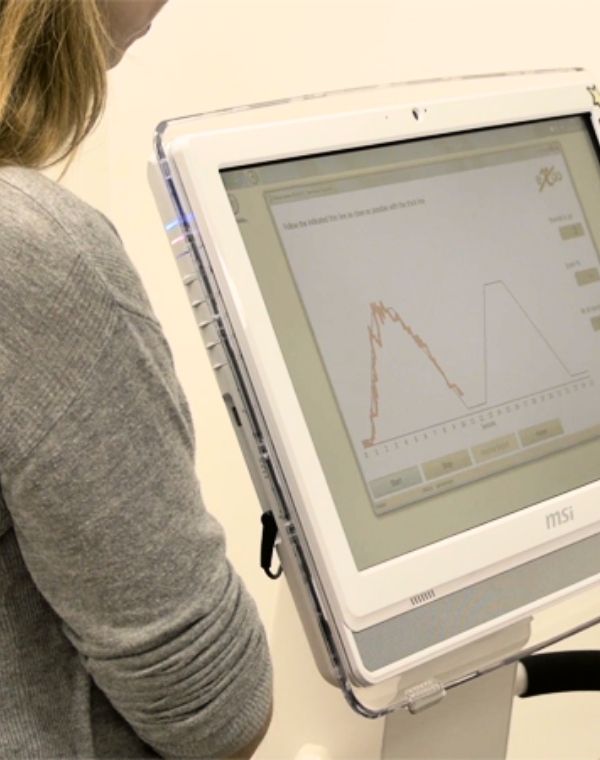
For patients with chronic lower back pain — particularly those who have not responded to standard physiotherapy — our Med-X Spinal Gym offers a treatment pathway unavailable elsewhere in East London. The Med-X Lower Lumbar Extension machine (“The Beast”) is a medical-grade rehabilitation device from the US with a specific evidence base for chronic lower back pain.
Unlike standard gym equipment, the Med-X isolates lumbar extensor musculature by fixing the pelvis, allowing targeted strengthening of the deep spinal extensors (multifidus) in a controlled, progressive way. Multiple peer-reviewed studies have demonstrated significant and durable pain reduction in chronic lower back pain following Med-X rehabilitation programmes.


The Med-X gym is also available via our membership plans for patients who benefit from ongoing use.
LPAW’s hydrotherapy pool — heated to 36°C — is invaluable for patients where back pain is severe enough to limit land-based exercise. The combination of buoyancy (reducing load on the spine) and warmth (reducing muscle spasm and improving circulation) allows movement and neural mobilisation exercises that are impossible or too painful on land. Hydrotherapy is particularly effective as an adjunct to Med-X rehabilitation for chronic back pain.



These are “red flags” that must be ruled out before physiotherapy treatment. Our physiotherapists conduct a full red flag screen at every initial assessment.
Most back pain is benign and responds to physiotherapy. However, certain features require urgent medical assessment. Seek immediate medical attention if you experience:
For patients with chronic lower back pain — particularly those who have not responded to standard physiotherapy — our Med-X Spinal Gym offers a treatment pathway unavailable elsewhere in East London. The Med-X Lower Lumbar Extension machine (“The Beast”) is a medical-grade rehabilitation device from the US with a specific evidence base for chronic lower back pain.
Unlike standard gym equipment, the Med-X isolates lumbar extensor musculature by fixing the pelvis, allowing targeted strengthening of the deep spinal extensors (multifidus) in a controlled, progressive way. Multiple peer-reviewed studies have demonstrated significant and durable pain reduction in chronic lower back pain following Med-X rehabilitation programmes.
The Med-X gym is also available via our membership plans for patients who benefit from ongoing use.
LPAW’s hydrotherapy pool — heated to 36°C — is invaluable for patients where back pain is severe enough to limit land-based exercise. The combination of buoyancy (reducing load on the spine) and warmth (reducing muscle spasm and improving circulation) allows movement and neural mobilisation exercises that are impossible or too painful on land. Hydrotherapy is particularly effective as an adjunct to Med-X rehabilitation for chronic back pain.


Most patients are discharged from hospital within 1–3 days of joint replacement surgery. LPAW can begin post-operative rehabilitation within the first week of discharge.
Your first post-operative appointment at LPAW (45–60 minutes) involves:
Review of your hospital discharge notes, surgical protocol, and weight-bearing status
Assessment of current wound state, swelling, pain, and range of motion
Agreement on the initial phase of your rehabilitation plan
First treatment session, typically including manual oedema management, range of motion work, and initial exercises
We work at your pace. Some patients progress rapidly, while others need more time at each phase. Your physiotherapist will adjust the programme based on what your body is doing rather than following a rigid calendar.
What We Do