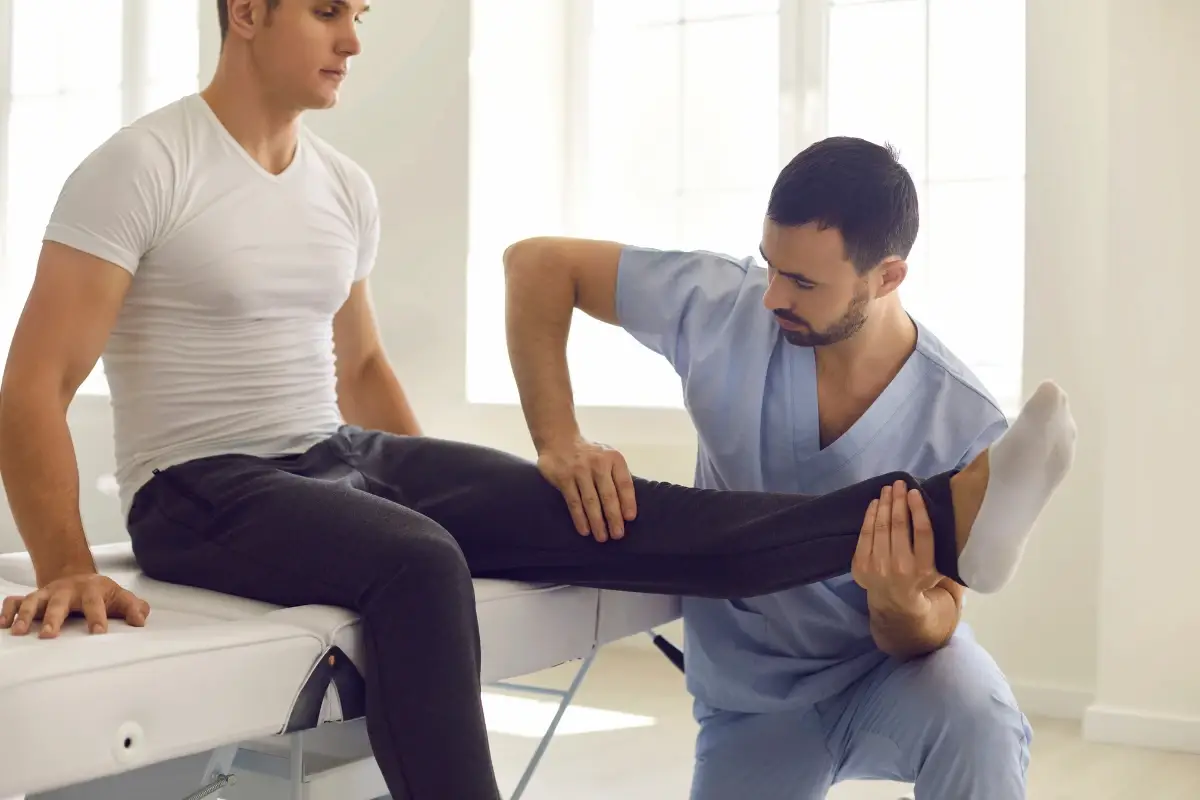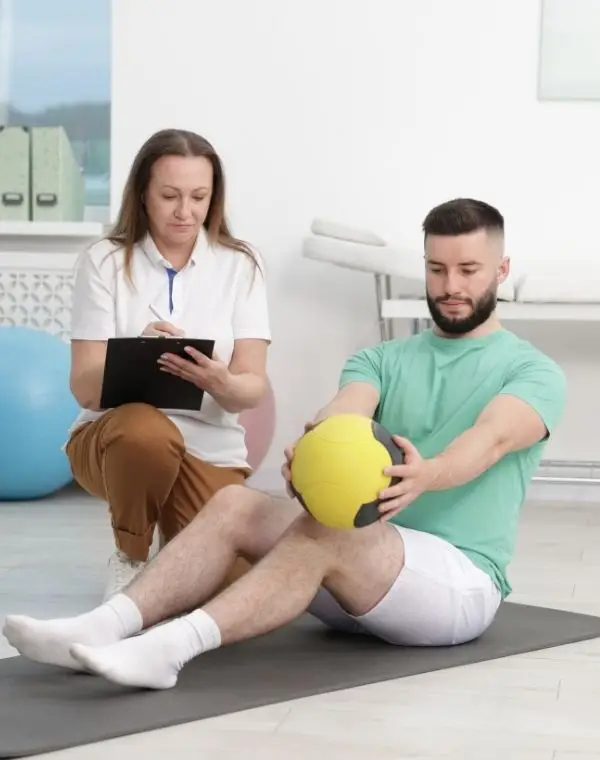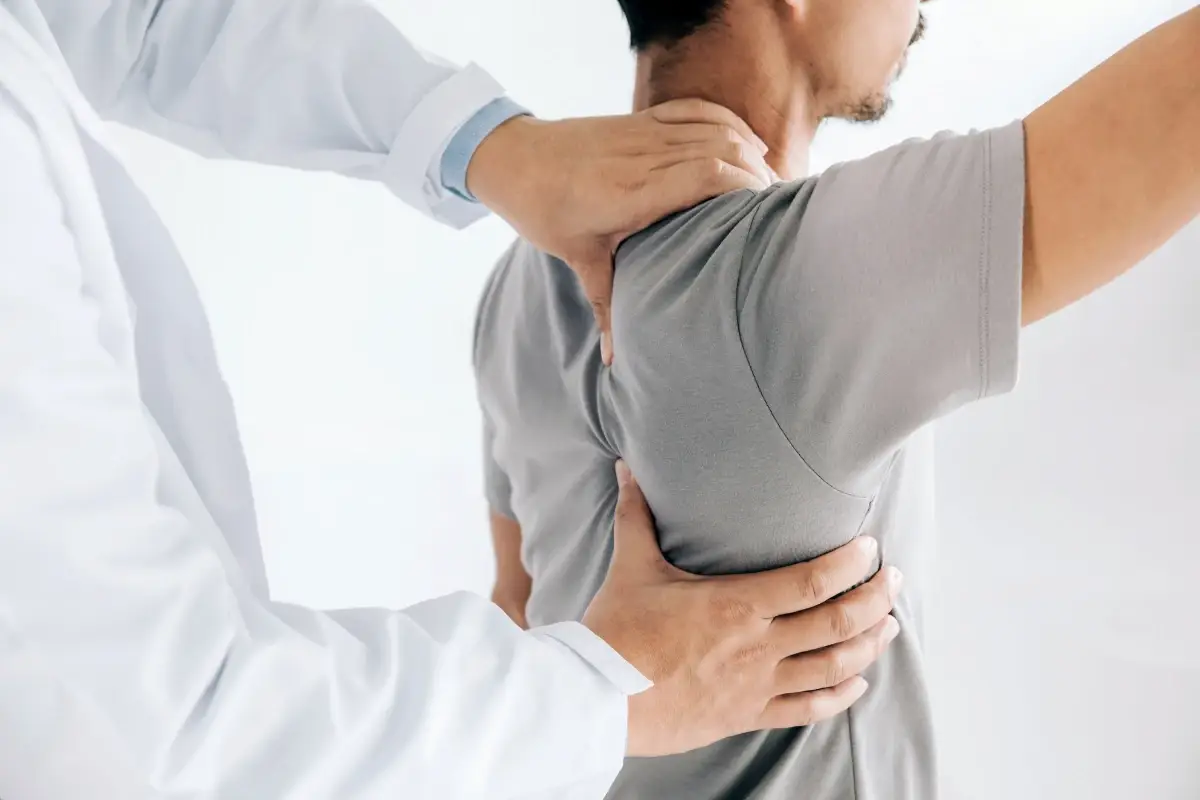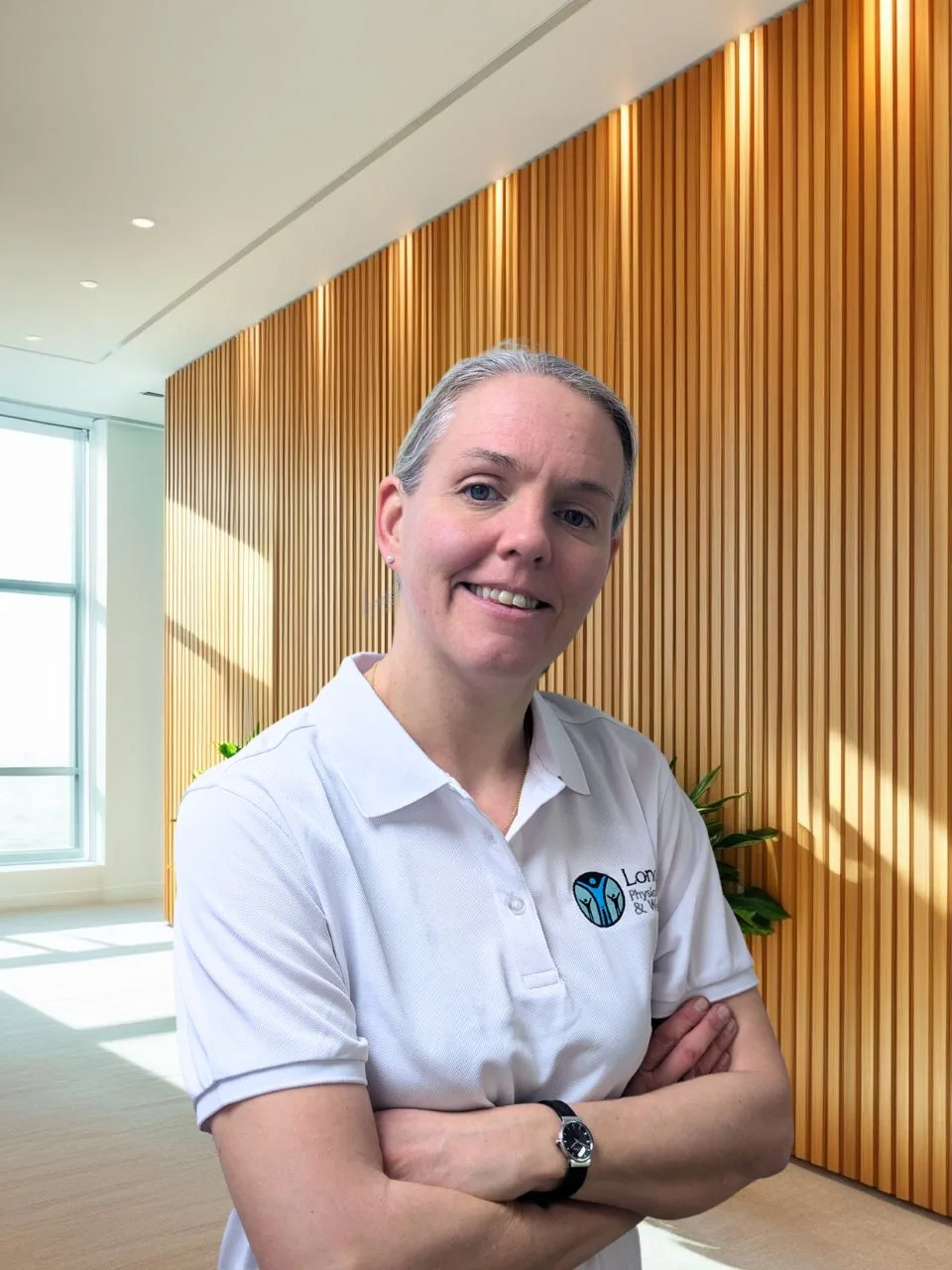



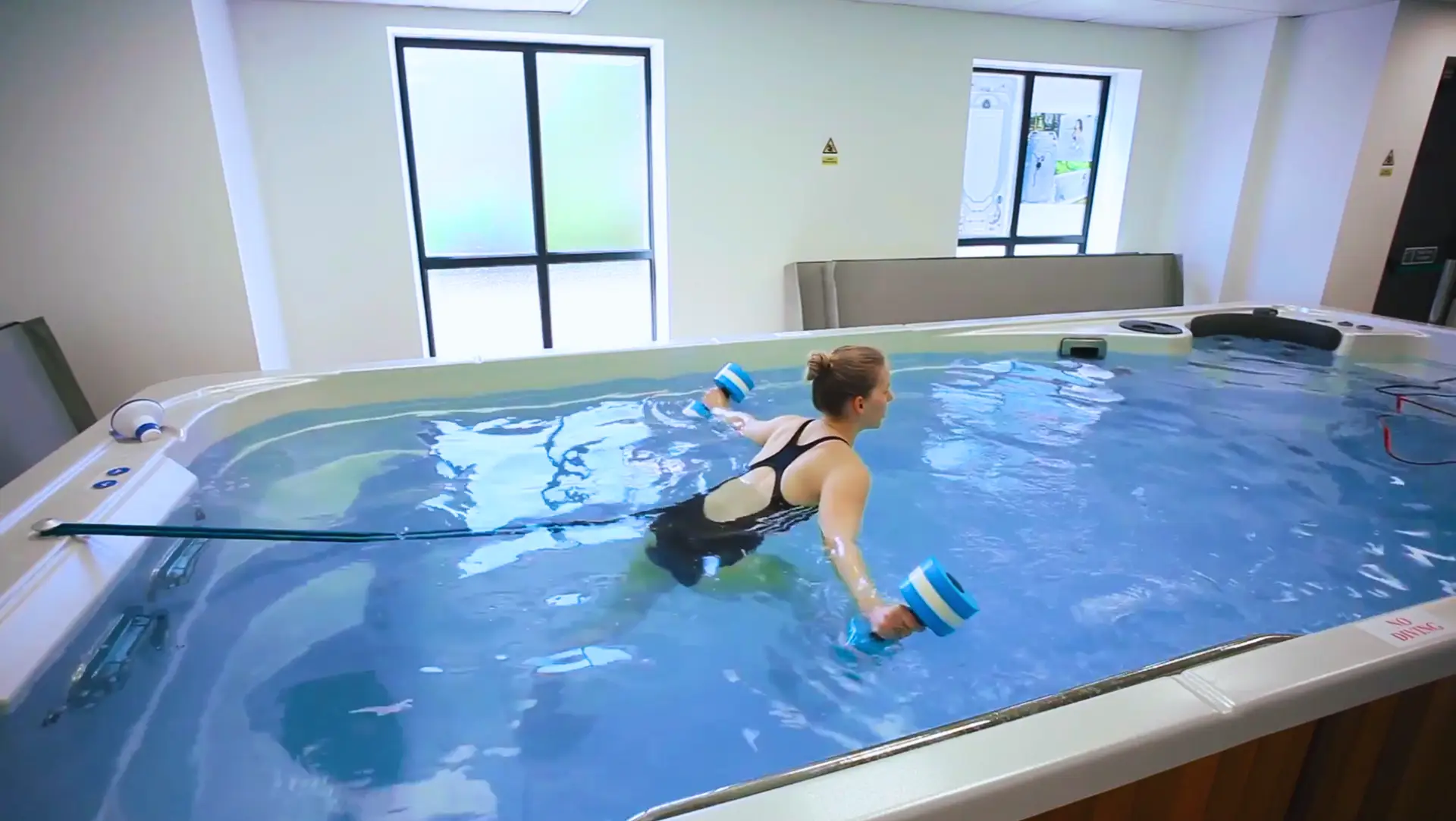
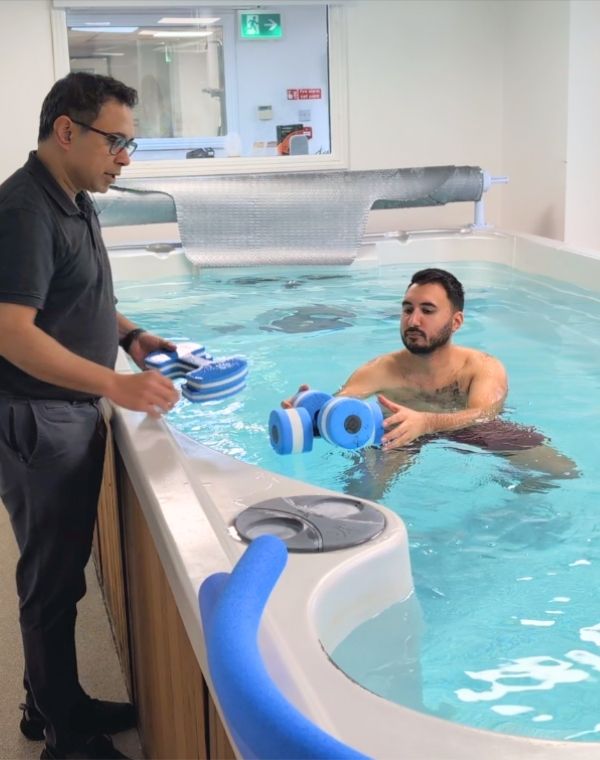
The main LPAW clinic is in Bow, E3, London, right next to The Bow Quarter. This bright and spacious clinic offers 4 treatment rooms, 2 changing rooms with showers, a large rehab gym, & onsite hydrotherapy in our 17 foot pool.
The LPAW satellite clinic is based in Stratford East Village where we run a thriving sports rehab offering.
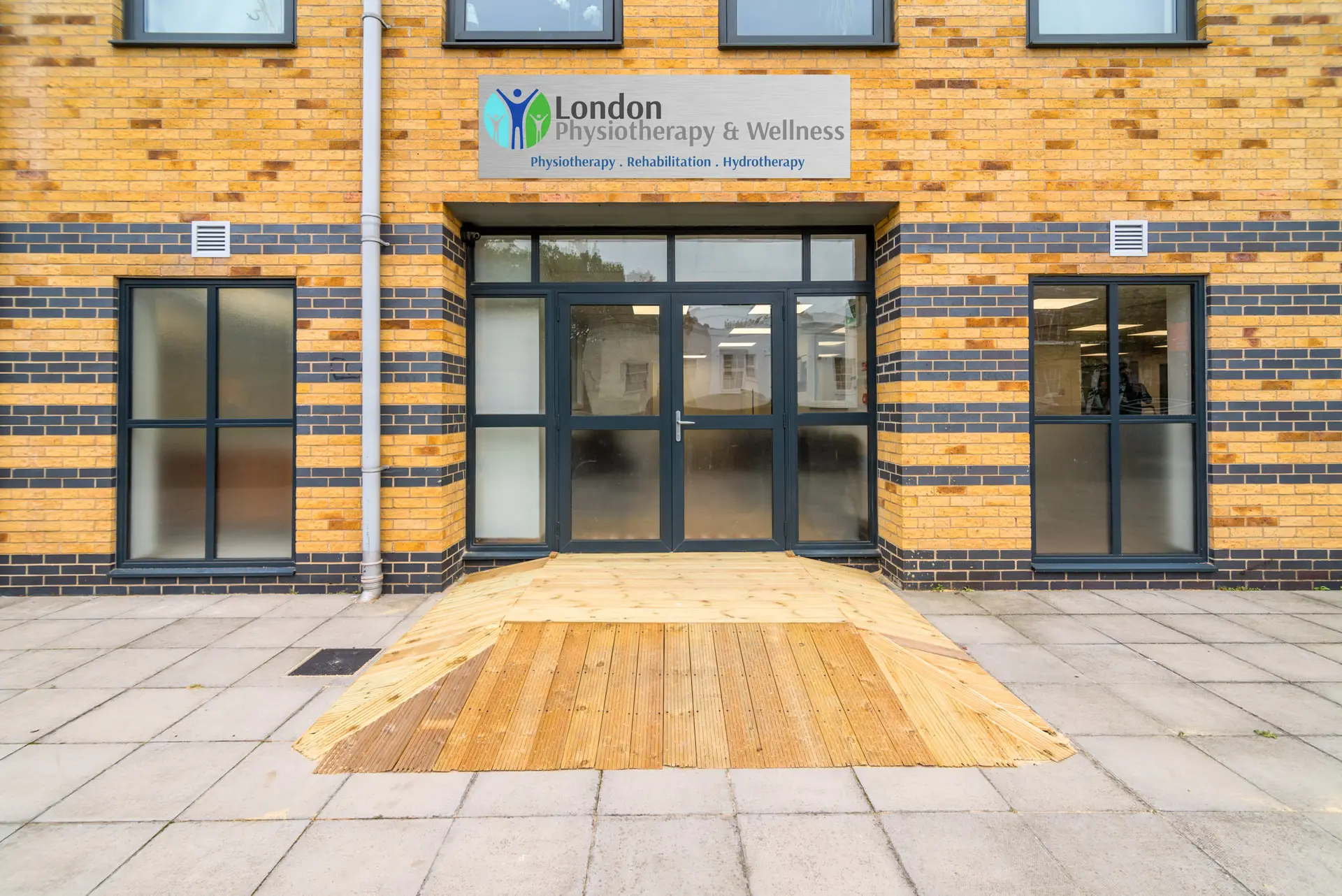
The main LPAW clinic is in Bow, E3, London, right next to The Bow Quarter. This bright and spacious clinic offers 4 treatment rooms, 2 changing rooms with showers, a large rehab gym, & onsite hydrotherapy in our 17 foot pool.
The LPAW satellite clinic is based in Stratford East Village where we run a thriving sports rehab offering.
Hamstring Strain Treatment in East London — From Acute Injury to Return to Sport
The hamstrings are a group of three muscles running along the back of the thigh:
Biceps femoris (long and short head): The most commonly injured hamstring muscle. The long head crosses both the hip and knee joints, making it particularly vulnerable during high-speed running.
Semitendinosus
Semimembranosus
All three muscles originate from the ischial tuberosity (the “sitting bone”) and insert below the knee. Their primary functions are knee flexion and hip extension, which are essential for sprinting and jumping.
The hamstrings are particularly vulnerable during high-speed sprinting, especially in the late swing phase of running when they are working eccentrically (lengthening under load). They are also at risk during sudden changes of direction or deceleration.
Muscle strain grades:
By location:
The hamstrings are a group of three muscles running along the back of the thigh:
Biceps femoris (long and short head): The most commonly injured hamstring muscle. The long head crosses both the hip and knee joints, making it particularly vulnerable during high-speed running.
Semitendinosus
Semimembranosus
All three muscles originate from the ischial tuberosity (the “sitting bone”) and insert below the knee. Their primary functions are knee flexion and hip extension, which are essential for sprinting and jumping.
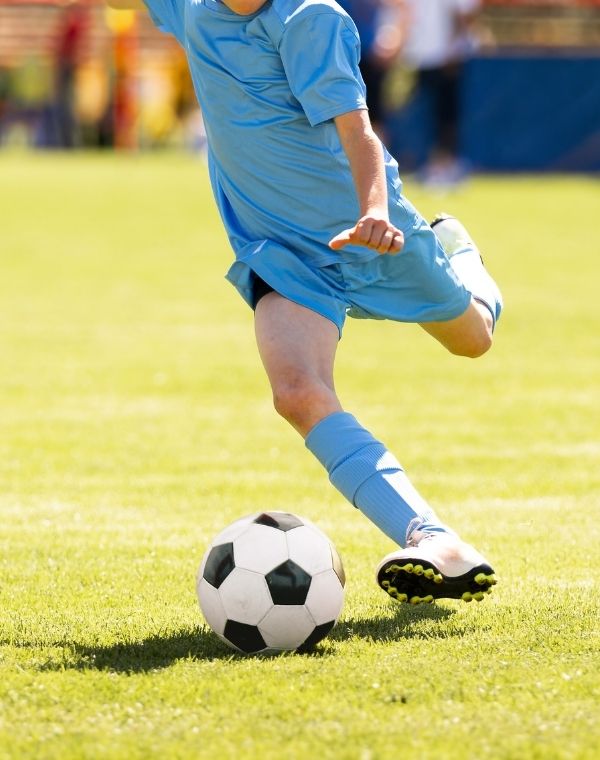
The hamstrings are particularly vulnerable during high-speed sprinting, especially in the late swing phase of running when they are working eccentrically (lengthening under load). They are also at risk during sudden changes of direction or deceleration.
Muscle strain grades:
By location:
LPAW’s clinical team includes 19 practitioners, many holding postgraduate qualifications from UCL, King’s College London, and Guy’s and St Thomas’. Lead clinician Mr Arjun Viswanath MSc, MCSP, MPPA – Co-Founder and Consultant Physiotherapist – brings 25+ years of NHS and private experience including BMI London Independent Hospital and Harley Street.
Every clinician joining LPAW completes a mandatory intensive shadowing placement with our Consultant Physiotherapist before seeing patients independently. This is not a standard practice at most clinics – it’s our way of maintaining clinical consistency across the team.
Acute Management (Days 0–7)
PEACE & LOVE protocol replaces the outdated RICE approach (see Sports Injuries):
Physiotherapy and sports therapy at LPAW follow a phased rehabilitation framework based on objective criteria rather than time alone:
Phase 1 — Tissue repair (Week 1–2 for Grade I; Week 1–4 for Grade II)
Phase 2 — Strength foundation (Weeks 2–6)
This is the most important phase for reducing recurrence risk.
Phase 3 — Running progression (Weeks 4–8+, depending on grade)
Phase 4 — Sport-specific and return to play (Weeks 8–12 for Grade II)
Acute Management (Days 0–7)
PEACE & LOVE protocol replaces the outdated RICE approach (see Sports Injuries):
What to avoid:
Physiotherapy and sports therapy at LPAW follow a phased rehabilitation framework based on objective criteria rather than time alone:
Phase 1 — Tissue repair (Week 1–2 for Grade I; Week 1–4 for Grade II)
Phase 2 — Strength foundation (Weeks 2–6)
This is the most important phase for reducing recurrence risk.
Phase 3 — Running progression (Weeks 4–8+, depending on grade)
Phase 4 — Sport-specific and return to play (Weeks 8–12 for Grade II)


What We Do