


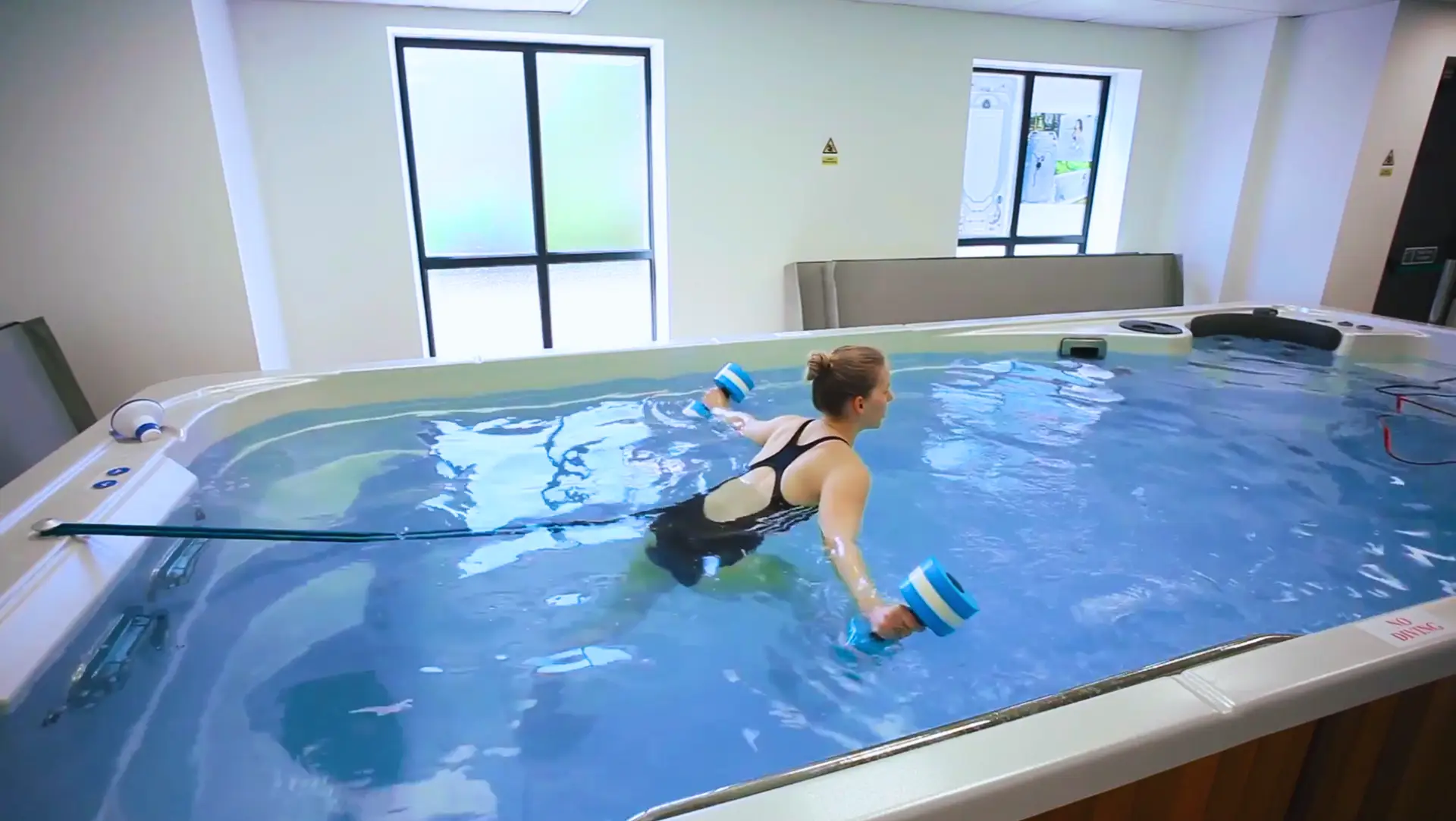
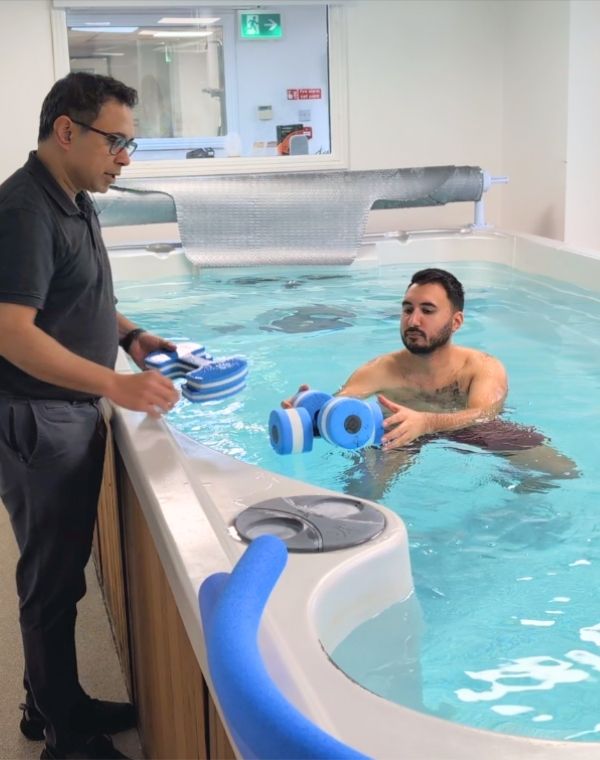
The main LPAW clinic is in Bow, E3, London, right next to The Bow Quarter. This bright and spacious clinic offers 4 treatment rooms, 2 changing rooms with showers, a large rehab gym, & onsite hydrotherapy in our 17 foot pool.
The LPAW satellite clinic is based in Stratford East Village where we run a thriving sports rehab offering.
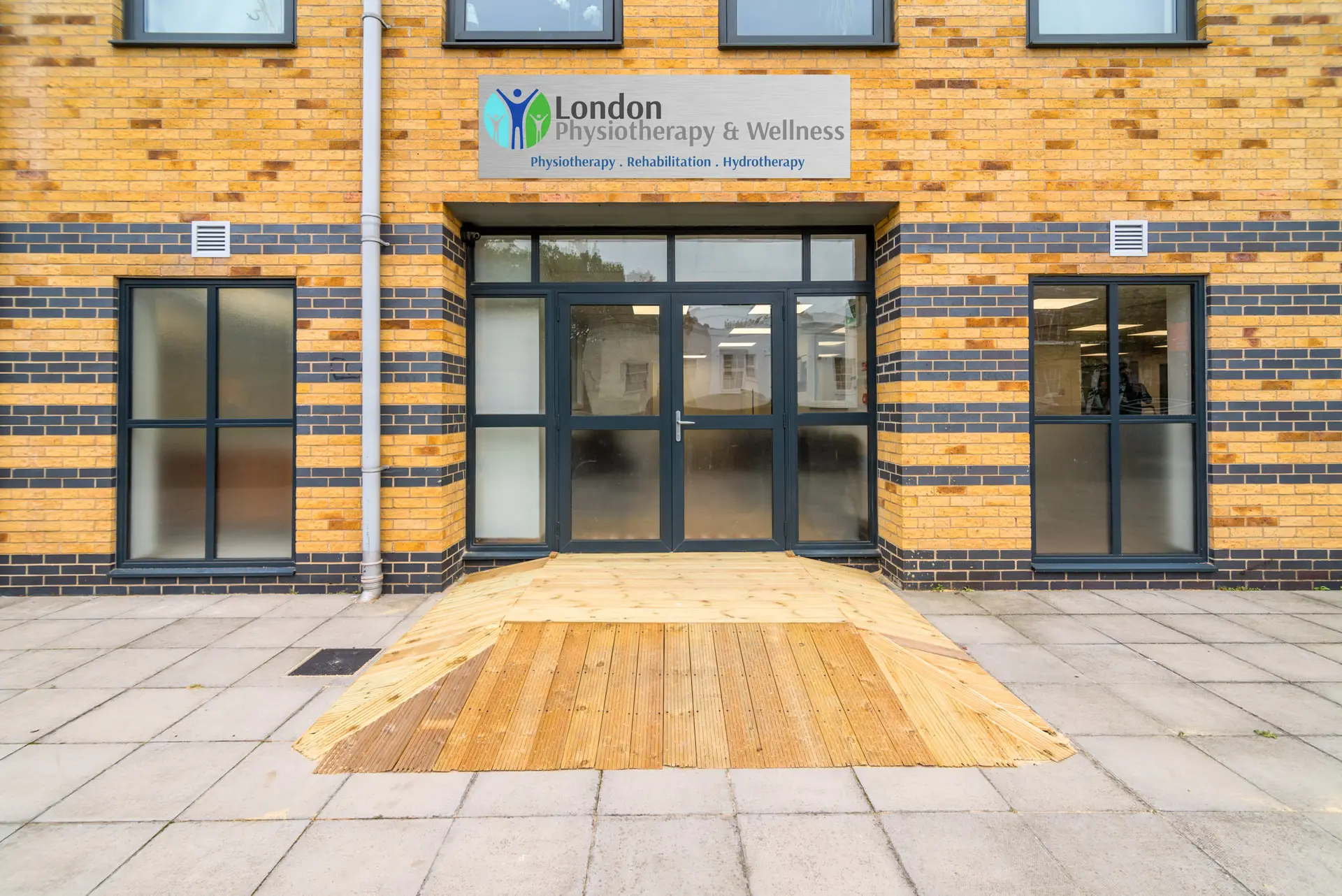
The main LPAW clinic is in Bow, E3, London, right next to The Bow Quarter. This bright and spacious clinic offers 4 treatment rooms, 2 changing rooms with showers, a large rehab gym, & onsite hydrotherapy in our 17 foot pool.
The LPAW satellite clinic is based in Stratford East Village where we run a thriving sports rehab offering.
The Achilles tendon is the largest and strongest tendon in the body, connecting the gastrocnemius and soleus muscles of the calf to the calcaneus (heel bone). It transmits the propulsive force of the calf during walking, running, and jumping, with loads reaching 6–8 times body weight during fast running.
Achilles tendinopathy involves degenerative changes within the tendon’s collagen matrix, including disorganised fibres, increased ground substance, neovascularisation, and nerve ingrowth. This process causes pain without the classical features of inflammation. As with patellar tendinopathy, this distinction is important because treatments aimed purely at reducing inflammation do not address the underlying pathology.
Two distinct presentations with different management approaches
Mid-portion Achilles tendinopathy: Pain and thickening located 2–6 cm above the calcaneal insertion. This is the most common presentation and is often associated with running overload. It generally responds well to calf-loading programmes and shockwave therapy.
Insertional Achilles tendinopathy: Pain located directly at the attachment of the Achilles tendon to the heel bone. This form is less common and is often associated with a bony prominence known as Haglund’s deformity. Management differs from mid-portion tendinopathy, particularly by avoiding heel-drop exercises that compress the tendon at its insertion.
Mid-portion Achilles tendinopathy
Insertional Achilles tendinopathy
Pain located directly at the attachment to the heel bone
Pain during activities that load the ankle in plantarflexion, such as heel raises or pushing off while walking or running
Symptoms that worsen with hill running or incline activities
Often more resistant to treatment than mid-portion Achilles tendinopathy
Seek urgent assessment if:
Sudden onset of severe calf pain with inability to push off: This may indicate an Achilles tendon rupture. A complete rupture often causes a snapping sensation, sudden severe pain, and difficulty walking normally. Immediate orthopaedic assessment is recommended.
Recent fluoroquinolone antibiotic use with new Achilles pain: Fluoroquinolone antibiotics are associated with an increased risk of tendon rupture and require careful assessment before continuing tendon loading activities.
The Achilles tendon is the largest and strongest tendon in the body, connecting the gastrocnemius and soleus muscles of the calf to the calcaneus (heel bone). It transmits the propulsive force of the calf during walking, running, and jumping, with loads reaching 6–8 times body weight during fast running.
Achilles tendinopathy involves degenerative changes within the tendon’s collagen matrix, including disorganised fibres, increased ground substance, neovascularisation, and nerve ingrowth. This process causes pain without the classical features of inflammation. As with patellar tendinopathy, this distinction is important because treatments aimed purely at reducing inflammation do not address the underlying pathology.
Two distinct presentations with different management approaches
Mid-portion Achilles tendinopathy: Pain and thickening located 2–6 cm above the calcaneal insertion. This is the most common presentation and is often associated with running overload. It generally responds well to calf-loading programmes and shockwave therapy.
Insertional Achilles tendinopathy: Pain located directly at the attachment of the Achilles tendon to the heel bone. This form is less common and is often associated with a bony prominence known as Haglund’s deformity. Management differs from mid-portion tendinopathy, particularly by avoiding heel-drop exercises that compress the tendon at its insertion.
Mid-portion Achilles tendinopathy
Insertional Achilles tendinopathy
Seek urgent assessment if:
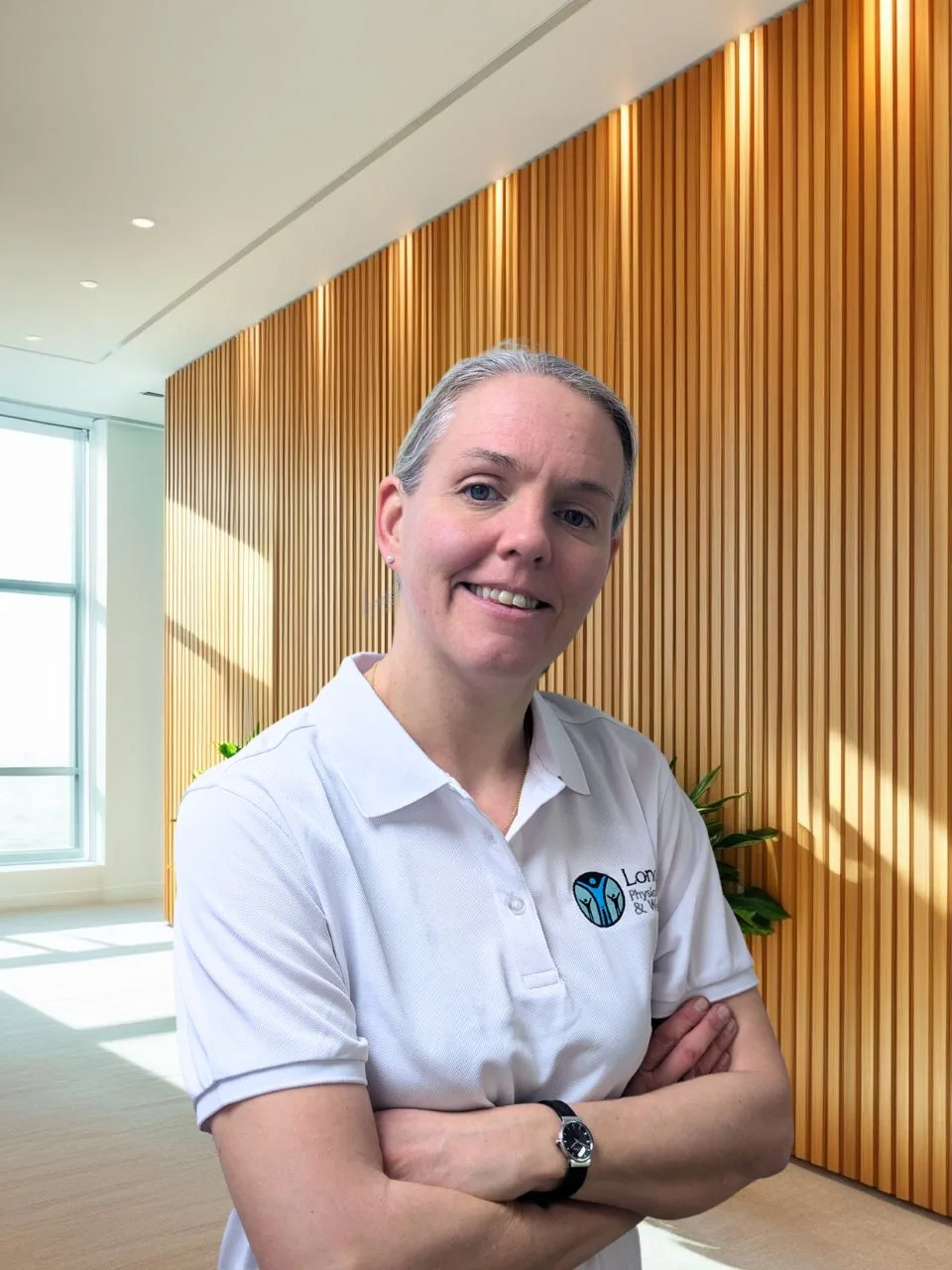
LPAW’s clinical team includes 19 practitioners, many holding postgraduate qualifications from UCL, King’s College London, and Guy’s and St Thomas’. Lead clinician Mr Arjun Viswanath MSc, MCSP, MPPA – Co-Founder and Consultant Physiotherapist – brings 25+ years of NHS and private experience including BMI London Independent Hospital and Harley Street.
Every clinician joining LPAW completes a mandatory intensive shadowing placement with our Consultant Physiotherapist before seeing patients independently. This is not a standard practice at most clinics – it’s our way of maintaining clinical consistency across the team.
The evidence is clear that progressive calf loading is one of the most effective treatments for Achilles tendinopathy. Modern rehabilitation has evolved from the original Alfredson eccentric protocol (1998) towards heavy slow resistance calf training, which research suggests produces similar or superior outcomes with better tolerance and adherence.
LPAW’s loading programme
Stage 1 — Isometric loading: Sustained calf holds performed on a leg press or in standing with the heel elevated. This stage aims to provide early pain relief while introducing tendon loading. Exercises are typically performed daily.
Stage 2 — Heavy slow resistance isotonic loading: Seated and standing calf raises are performed with progressively increasing resistance using a slow tempo, commonly around 3 seconds up and 3 seconds down. Loading usually begins at a weight allowing approximately 15 repetitions and progresses towards heavier loads at around 6 repetitions over 8–12 weeks.
For mid-portion Achilles tendinopathy, the classic Alfredson protocol — single-leg heel drops off a step with both straight and bent knee positions — remains an effective option. However, heavy slow resistance training often achieves similar outcomes with improved compliance.
For insertional Achilles tendinopathy, heel drops off a step are generally avoided because this position compresses the tendon at its insertion and may aggravate symptoms. Loading is instead performed on flat ground, avoiding excessive ankle dorsiflexion.
Stage 3 — Plyometric loading: Progressive hopping, bounding, and jumping exercises are introduced to restore the tendon’s energy storage and release capacity. This stage is particularly important for runners and athletes.
Stage 4 — Return to running: A gradual return-to-running programme is introduced once plyometric exercises can be completed without symptom provocation.
For runners, a [running assessment] identifies biomechanical contributors to Achilles overloading — calf flexibility, ankle mechanics, running cadence, and gait pattern. Addressing these factors reduces the likelihood of recurrence after recovery.
Shockwave therapy may be used for specific presentations of chronic back pain — particularly those involving myofascial trigger points or thoracolumbar fascial pain — though it is not the primary treatment for most back pain presentations.
Most back pain is benign and responds to physiotherapy. However, certain features require urgent medical assessment. Seek immediate medical attention if you experience:
The evidence is clear that progressive calf loading is one of the most effective treatments for Achilles tendinopathy. Modern rehabilitation has evolved from the original Alfredson eccentric protocol (1998) towards heavy slow resistance calf training, which research suggests produces similar or superior outcomes with better tolerance and adherence.
LPAW’s loading programme
Stage 1 — Isometric loading: Sustained calf holds performed on a leg press or in standing with the heel elevated. This stage aims to provide early pain relief while introducing tendon loading. Exercises are typically performed daily.
Stage 2 — Heavy slow resistance isotonic loading: Seated and standing calf raises are performed with progressively increasing resistance using a slow tempo, commonly around 3 seconds up and 3 seconds down. Loading usually begins at a weight allowing approximately 15 repetitions and progresses towards heavier loads at around 6 repetitions over 8–12 weeks.
For mid-portion Achilles tendinopathy, the classic Alfredson protocol — single-leg heel drops off a step with both straight and bent knee positions — remains an effective option. However, heavy slow resistance training often achieves similar outcomes with improved compliance.
For insertional Achilles tendinopathy, heel drops off a step are generally avoided because this position compresses the tendon at its insertion and may aggravate symptoms. Loading is instead performed on flat ground, avoiding excessive ankle dorsiflexion.
Stage 3 — Plyometric loading: Progressive hopping, bounding, and jumping exercises are introduced to restore the tendon’s energy storage and release capacity. This stage is particularly important for runners and athletes.
Stage 4 — Return to running: A gradual return-to-running programme is introduced once plyometric exercises can be completed without symptom provocation.
Shockwave therapy may be used for specific presentations of chronic back pain — particularly those involving myofascial trigger points or thoracolumbar fascial pain — though it is not the primary treatment for most back pain presentations.


Recent onset (< 6 weeks), mild symptoms: Recovery commonly takes 6–12 weeks.
Established symptoms (3–6 months): Improvement often takes 3–6 months with a consistent loading programme, with shockwave therapy sometimes used as an adjunct treatment.
Chronic symptoms (> 12 months): Recovery may take 6–12 months, although significant improvement is still achievable.
Perform daily calf loading: Consistency is more important than intensity in the early stages. Isometric calf holds for 45 seconds, performed 3–5 times daily, are a common starting point.
Reduce, but do not completely stop running: Unless symptoms are severe, reducing running volume by around 50% from the level that triggered symptoms is often recommended. Cycling and swimming can help maintain fitness during rehabilitation.
Use a temporary heel raise: A 1–1.5 cm heel raise inside the shoe can reduce strain on the Achilles tendon and may provide short-term symptom relief. This should be viewed as a temporary strategy rather than a permanent solution.
Avoid barefoot or minimalist footwear during rehabilitation: These types of footwear can increase loading through the Achilles tendon.
Warm up the tendon before running: Performing isometric calf exercises before running may help reduce pain during activity.
Perform daily calf loading: Consistency is more important than intensity in the early stages. Isometric calf holds for 45 seconds, performed 3–5 times daily, are a common starting point.
Reduce, but do not completely stop running: Unless symptoms are severe, reducing running volume by around 50% from the level that triggered symptoms is often recommended. Cycling and swimming can help maintain fitness during rehabilitation.
Use a temporary heel raise: A 1–1.5 cm heel raise inside the shoe can reduce strain on the Achilles tendon and may provide short-term symptom relief. This should be viewed as a temporary strategy rather than a permanent solution.
Avoid barefoot or minimalist footwear during rehabilitation: These types of footwear can increase loading through the Achilles tendon.
Warm up the tendon before running: Performing isometric calf exercises before running may help reduce pain during activity.
What We Do