36ºC Hydrotherapy

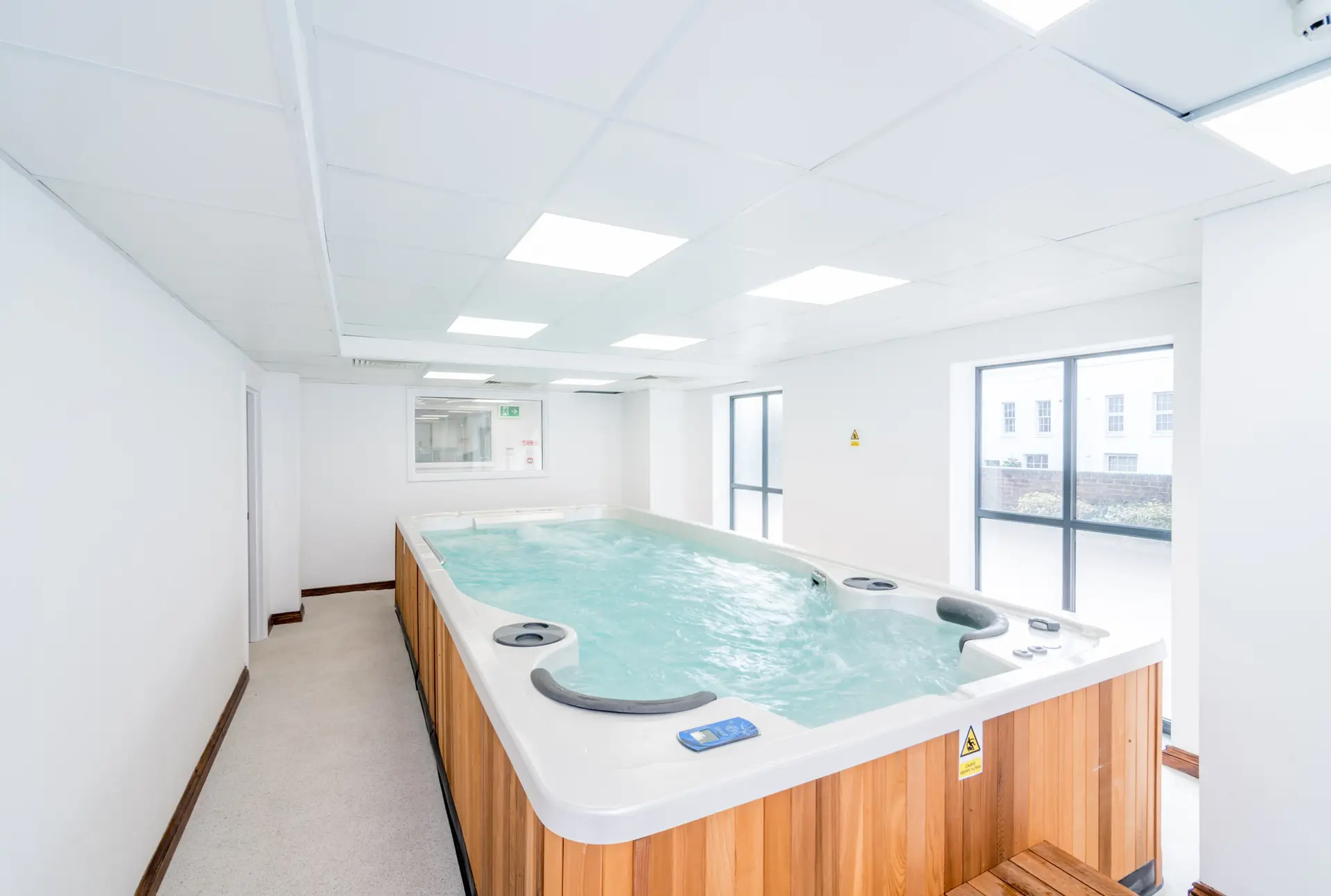
Experience our Hydropool AquaTrainer 17′ fX

Start Your Recovery

LPAW’s hydrotherapy pool — located within our Bow flagship clinic at 46–52 Fairfield Road — is one of the only on-site clinical hydrotherapy pools in East London, and at 36°C, it is the warmest therapeutic pool in the region. It is not a leisure facility. It is not a general swimming pool. It is a dedicated clinical tool, built and maintained for one purpose: delivering therapeutic outcomes that land-based treatment cannot achieve alone.

This page is about the facility itself — what it is, why the temperature matters, and who it is for. For information on the clinical treatments delivered in the pool, see our Hydrotherapy service page.

Physiotherapy Hydrotherapy Shockwave Sports Therapy Women's Health Dry Needling Osteopathy Pilates by Physios Babies & Children Men's Health Massage Running Assessments PTNS Post-Op Biofeedback Soft Tissue Therapy Manual Therapy Pre-Op Trigger Point Release Med-X Strengthening Physiotherapy Hydrotherapy Shockwave Sports Therapy Women's Health Dry Needling Osteopathy Pilates by Physios Babies & Children Men's Health Massage Running Assessments PTNS Post-Op Biofeedback Soft Tissue Therapy Manual Therapy Pre-Op Trigger Point Release Med-X Strengthening
The Facility

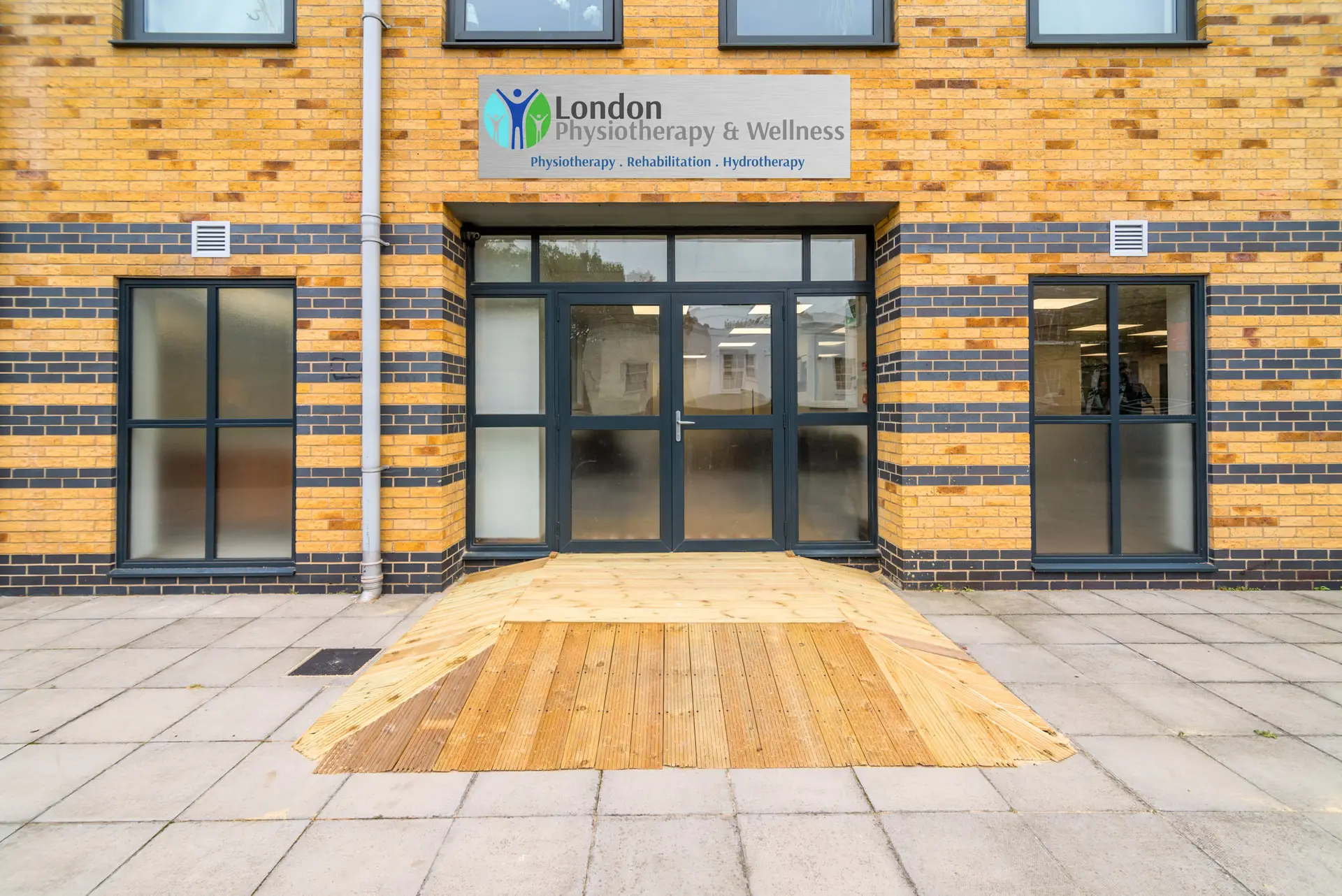
Location: 46–52 Fairfield Road, Bow, London E3 2QA — a short walk from Bow Church DLR station, with the pool contained within the main clinic building.

Temperature: 36°C — maintained consistently at this therapeutic temperature year-round. This is not approximate. Pool temperature is monitored and controlled to remain within therapeutic range.

Access: The pool is accessible to clinical patients with a scheduled hydrotherapy appointment, and to self-use members who have completed a clinical assessment and been approved for unsupervised use. The pool is not accessible to the general public as a leisure facility.

Changing facilities: Private changing rooms are available adjacent to the pool. Grab rails and pool steps provide safe entry and exit.

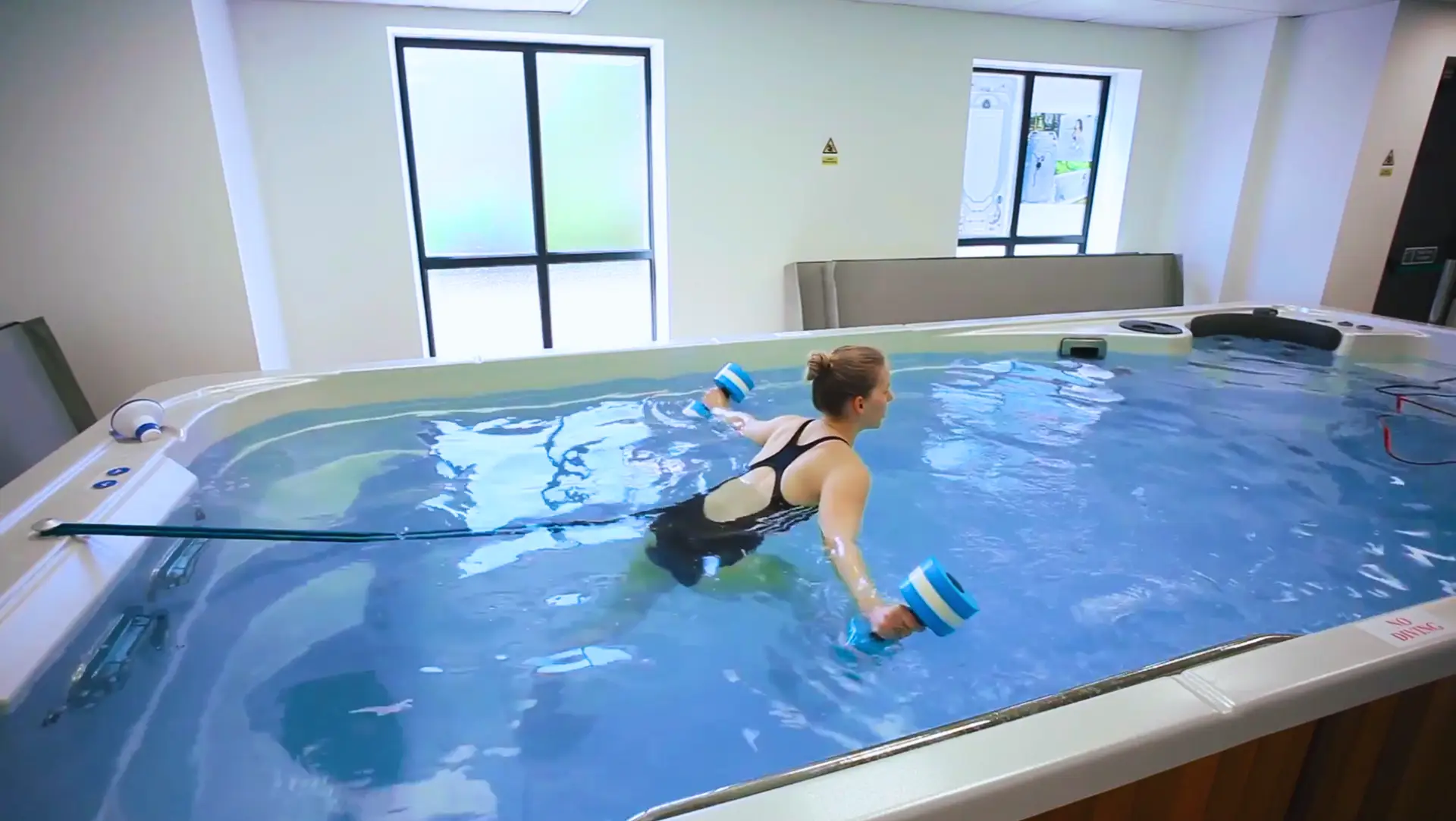
Poolside equipment: Therapeutic floats, resistance tools, pool noodles, support bars, and steps are available within the pool environment. The configuration of the pool allows physiotherapists to treat patients at multiple depths.

Hygiene and maintenance: The pool is maintained to clinical standards, with regular water quality testing and chemistry management. Only LPAW patients and members access the pool.

The temperature of a hydrotherapy pool is not an incidental feature. It is the primary therapeutic variable that distinguishes a clinical hydrotherapy pool from a leisure centre pool or a hospital pool, and it determines a large proportion of the clinical benefit.

Standard leisure centre pools: 28–30°C. Most hospital hydrotherapy pools: 33–34°C. LPAW’s clinical pool: 36°C.

At each temperature step, the physiological and clinical effects change meaningfully.

Vasodilation and circulation. Warm water causes peripheral blood vessels to dilate. At 36°C — matching or slightly exceeding core body temperature — the vasodilatory response is maximal, significantly increasing blood flow to muscles, tendons, and soft tissue. This improves the delivery of oxygen and nutrients to healing tissue and accelerates the removal of metabolic waste products.

Muscle relaxation and spasm reduction. The warmth penetrates muscle tissue, reducing tension and involuntary muscle guarding. For patients with chronic pain conditions, fibromyalgia, polymyalgia rheumatica, or severe spinal conditions, this relaxation effect is significant — it reduces the pain barrier to movement, allowing therapeutic exercise that would otherwise be too painful or too restricted.

Cold sensitivity and pain amplification. Many patients with chronic pain conditions — fibromyalgia in particular — have heightened sensitivity to cold. Standard pool temperatures (28–30°C) are experienced as cold by these patients and can trigger pain amplification. At 36°C, this response is eliminated. The pool is comfortable from the moment of entry.

Early post-surgical comfort. Following joint replacement or orthopaedic surgery, the sensitivity of the operated limb is heightened. A cooler pool would provoke discomfort and guarding; 36°C provides the warmth that allows post-surgical patients to move with greater confidence and less pain in the critical early rehabilitation window.

Neurological conditions. Patients with multiple sclerosis must exercise in controlled temperatures — overheating in a warm pool can temporarily worsen neurological symptoms (Uhthoff’s phenomenon). Our therapists manage pool temperature and session intensity carefully for neurological patients, and the consistent 36°C environment allows this to be done predictably.


Beyond temperature, the physical properties of water at any temperature deliver benefits that land-based therapy cannot replicate:

Buoyancy — unloading the body. Water’s buoyant force reduces the effective weight of the body depending on depth of immersion. At neck depth: approximately 90% reduction. At chest depth: approximately 60–70% reduction. At waist depth: approximately 50% reduction.

This graduated unloading means that exercises impossible or too painful on land — walking, squatting, range-of-motion work — become achievable in the pool. For post-surgical patients with weight-bearing restrictions, or patients with severe joint pain, this is not a convenience. It is the mechanism that makes early rehabilitation possible.

Hydrostatic pressure — natural compression and support. Water exerts uniform pressure on all submerged surfaces. This compression reduces swelling, supports joint proprioception (the sense of joint position in space), and provides stability — particularly valuable for patients with joint instability or poor proprioception following injury or surgery.

Resistance — 12 times that of air. Moving through water provides 12 times more resistance than moving through air, in all directions simultaneously. This makes every movement a strengthening exercise without requiring weights, machines, or special equipment. The resistance is also self-limiting — the faster you move, the more resistance you encounter — which provides a natural safety mechanism for patients.

Viscosity — slowing movement down. The viscosity of water slows movement relative to air. This provides additional stabilisation and reaction time, particularly valuable for patients with neurological conditions, balance impairments, or post-surgical uncertainty.

To understand why the LPAW hydrotherapy pool matters, it helps to appreciate how rare on-site clinical hydrotherapy pools are in private physiotherapy practice in London.

NHS hydrotherapy services have been significantly reduced over the past decade — many hospital hydrotherapy pools have been closed due to maintenance costs and funding constraints. The result is that many patients who would clearly benefit from hydrotherapy have no realistic access to it within the NHS.

In the private sector, the majority of physiotherapy clinics have no pool at all. Those that do use pools typically access external facilities — leisure centres or hotel pools — which are shared with leisure swimmers, maintained at lower temperatures, and not configured for clinical use.

LPAW built and maintains an on-site pool because we believe it is one of the most powerful rehabilitation tools available — and because the patients who need it most are the ones who often cannot access it elsewhere.

Location: 46–52 Fairfield Road, Bow, London E3 2QA — a short walk from Bow Church DLR station, with the pool contained within the main clinic building.

Temperature: 36°C — maintained consistently at this therapeutic temperature year-round. This is not approximate. Pool temperature is monitored and controlled to remain within therapeutic range.

Access: The pool is accessible to clinical patients with a scheduled hydrotherapy appointment, and to self-use members who have completed a clinical assessment and been approved for unsupervised use. The pool is not accessible to the general public as a leisure facility.

Changing facilities: Private changing rooms are available adjacent to the pool. Grab rails and pool steps provide safe entry and exit.

Poolside equipment: Therapeutic floats, resistance tools, pool noodles, support bars, and steps are available within the pool environment. The configuration of the pool allows physiotherapists to treat patients at multiple depths.

Hygiene and maintenance: The pool is maintained to clinical standards, with regular water quality testing and chemistry management. Only LPAW patients and members access the pool.

The temperature of a hydrotherapy pool is not an incidental feature. It is the primary therapeutic variable that distinguishes a clinical hydrotherapy pool from a leisure centre pool or a hospital pool, and it determines a large proportion of the clinical benefit.

Standard leisure centre pools: 28–30°C. Most hospital hydrotherapy pools: 33–34°C. LPAW’s clinical pool: 36°C.

At each temperature step, the physiological and clinical effects change meaningfully.

Vasodilation and circulation. Warm water causes peripheral blood vessels to dilate. At 36°C — matching or slightly exceeding core body temperature — the vasodilatory response is maximal, significantly increasing blood flow to muscles, tendons, and soft tissue. This improves the delivery of oxygen and nutrients to healing tissue and accelerates the removal of metabolic waste products.

Muscle relaxation and spasm reduction. The warmth penetrates muscle tissue, reducing tension and involuntary muscle guarding. For patients with chronic pain conditions, fibromyalgia, polymyalgia rheumatica, or severe spinal conditions, this relaxation effect is significant — it reduces the pain barrier to movement, allowing therapeutic exercise that would otherwise be too painful or too restricted.

Cold sensitivity and pain amplification. Many patients with chronic pain conditions — fibromyalgia in particular — have heightened sensitivity to cold. Standard pool temperatures (28–30°C) are experienced as cold by these patients and can trigger pain amplification. At 36°C, this response is eliminated. The pool is comfortable from the moment of entry.

Early post-surgical comfort. Following joint replacement or orthopaedic surgery, the sensitivity of the operated limb is heightened. A cooler pool would provoke discomfort and guarding; 36°C provides the warmth that allows post-surgical patients to move with greater confidence and less pain in the critical early rehabilitation window.

Neurological conditions. Patients with multiple sclerosis must exercise in controlled temperatures — overheating in a warm pool can temporarily worsen neurological symptoms (Uhthoff’s phenomenon). Our therapists manage pool temperature and session intensity carefully for neurological patients, and the consistent 36°C environment allows this to be done predictably.

Beyond temperature, the physical properties of water at any temperature deliver benefits that land-based therapy cannot replicate:

Buoyancy — unloading the body. Water’s buoyant force reduces the effective weight of the body depending on depth of immersion. At neck depth: approximately 90% reduction. At chest depth: approximately 60–70% reduction. At waist depth: approximately 50% reduction.

This graduated unloading means that exercises impossible or too painful on land — walking, squatting, range-of-motion work — become achievable in the pool. For post-surgical patients with weight-bearing restrictions, or patients with severe joint pain, this is not a convenience. It is the mechanism that makes early rehabilitation possible.

Hydrostatic pressure — natural compression and support. Water exerts uniform pressure on all submerged surfaces. This compression reduces swelling, supports joint proprioception (the sense of joint position in space), and provides stability — particularly valuable for patients with joint instability or poor proprioception following injury or surgery.

Resistance — 12 times that of air. Moving through water provides 12 times more resistance than moving through air, in all directions simultaneously. This makes every movement a strengthening exercise without requiring weights, machines, or special equipment. The resistance is also self-limiting — the faster you move, the more resistance you encounter — which provides a natural safety mechanism for patients.

Viscosity — slowing movement down. The viscosity of water slows movement relative to air. This provides additional stabilisation and reaction time, particularly valuable for patients with neurological conditions, balance impairments, or post-surgical uncertainty.

To understand why the LPAW hydrotherapy pool matters, it helps to appreciate how rare on-site clinical hydrotherapy pools are in private physiotherapy practice in London.

NHS hydrotherapy services have been significantly reduced over the past decade — many hospital hydrotherapy pools have been closed due to maintenance costs and funding constraints. The result is that many patients who would clearly benefit from hydrotherapy have no realistic access to it within the NHS.

In the private sector, the majority of physiotherapy clinics have no pool at all. Those that do use pools typically access external facilities — leisure centres or hotel pools — which are shared with leisure swimmers, maintained at lower temperatures, and not configured for clinical use.

LPAW built and maintains an on-site pool because we believe it is one of the most powerful rehabilitation tools available — and because the patients who need it most are the ones who often cannot access it elsewhere.

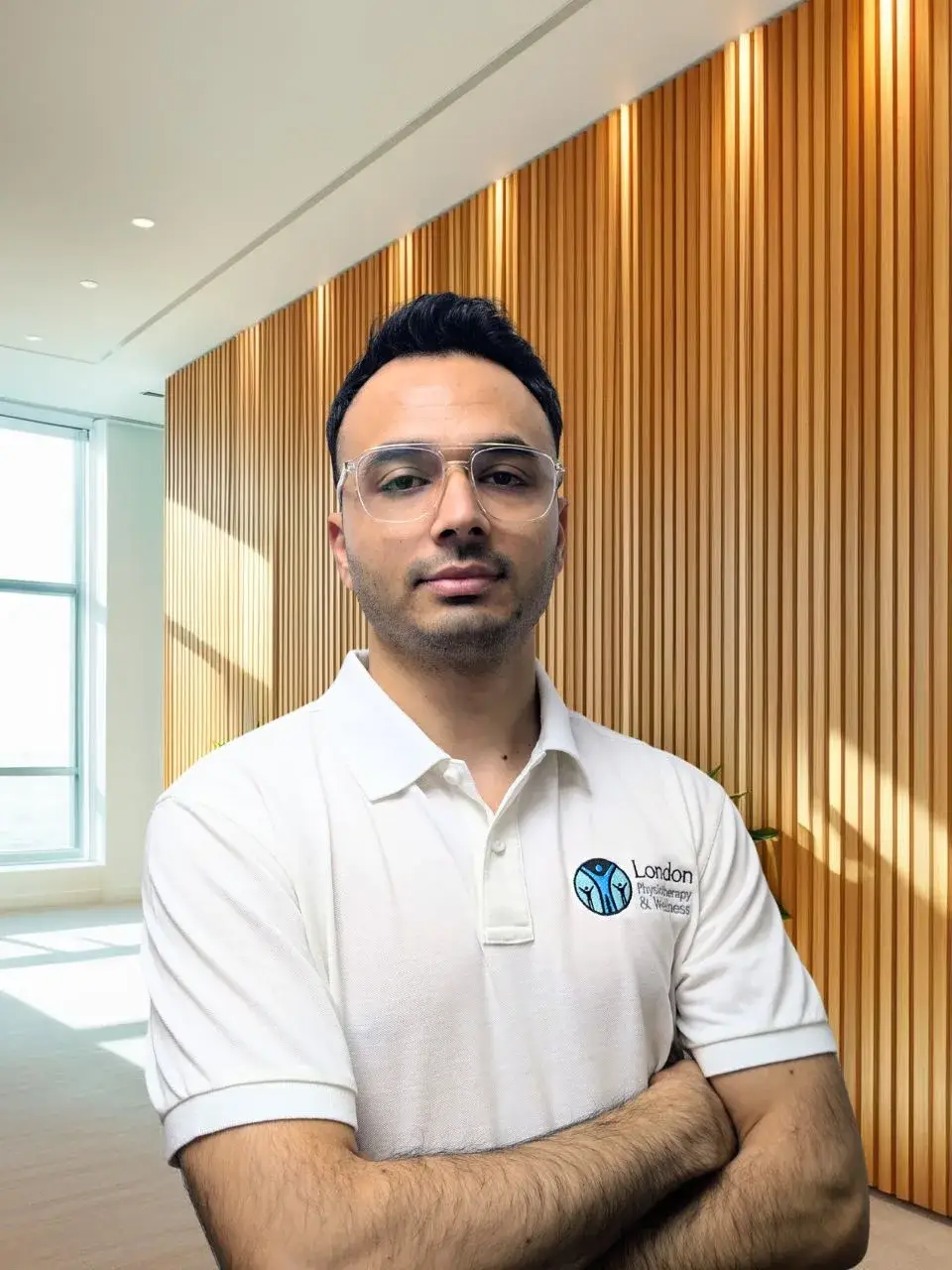
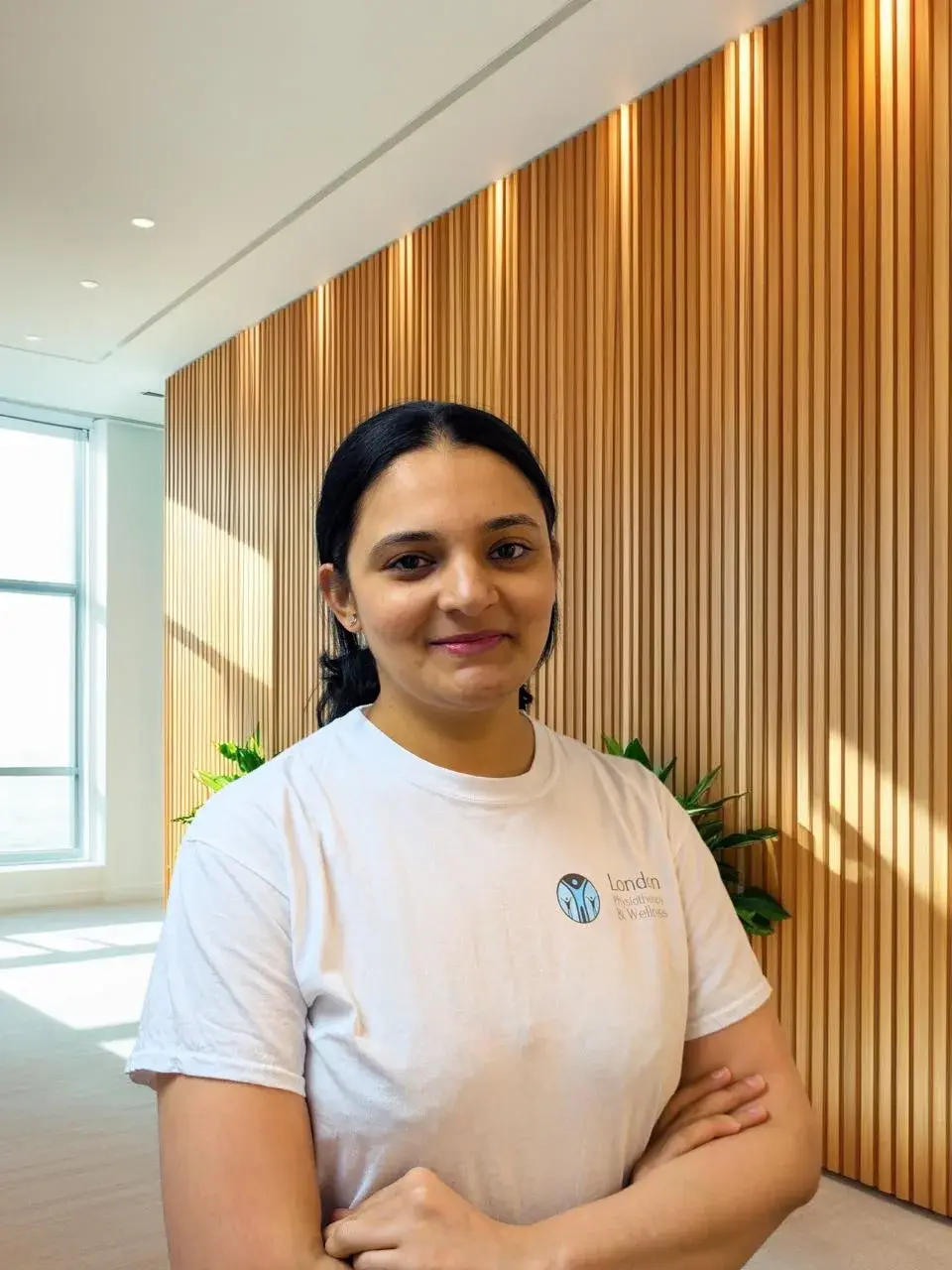
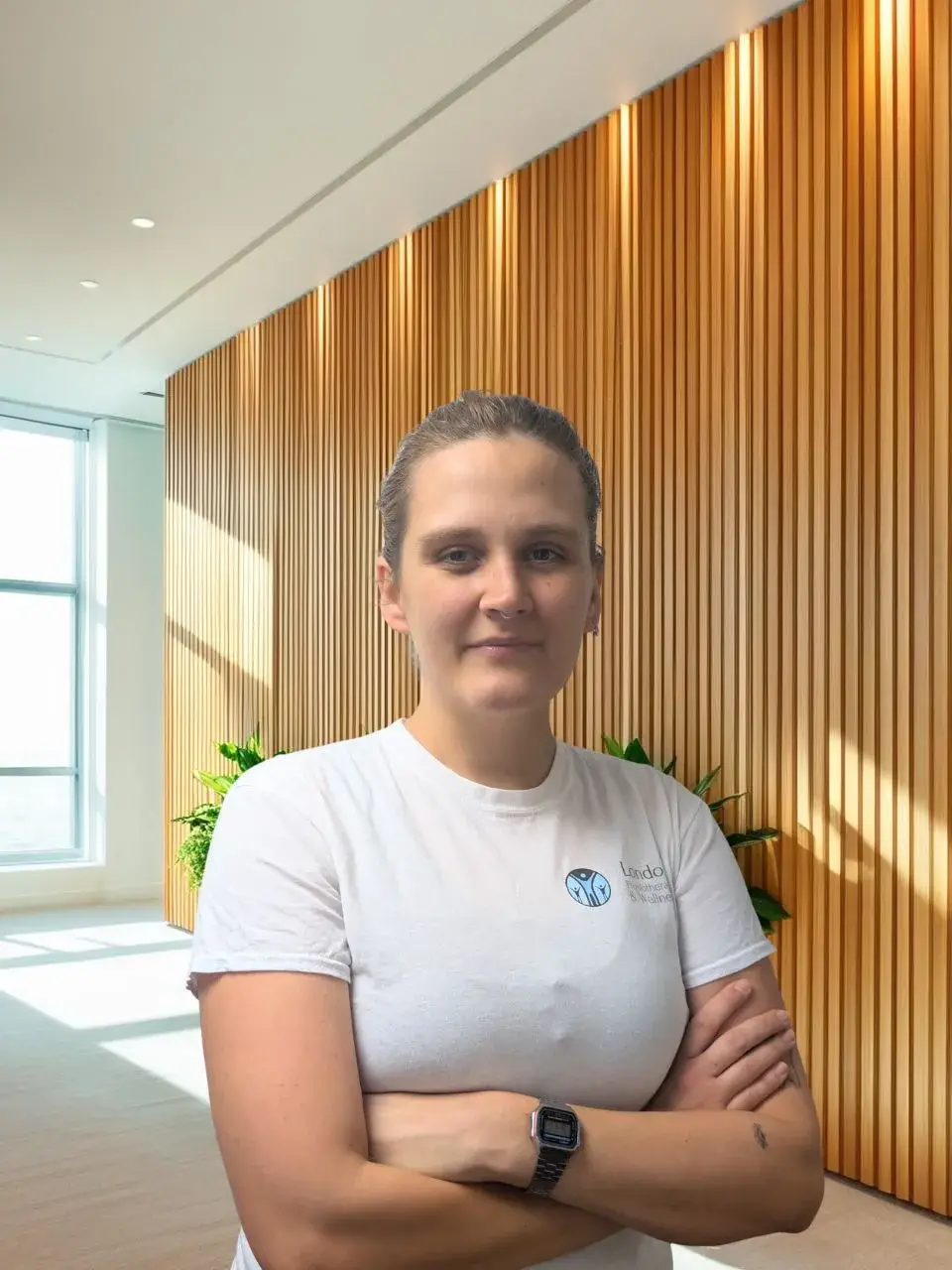
Meet our team of experts

LPAW’s clinical team includes 19 practitioners, many holding postgraduate qualifications from UCL, King’s College London, and Guy’s and St Thomas’. Lead clinician Mr Arjun Viswanath MSc, MCSP, MPPA – Co-Founder and Consultant Physiotherapist – brings 25+ years of NHS and private experience including BMI London Independent Hospital and Harley Street.

Every clinician joining LPAW completes a mandatory intensive shadowing placement with our Consultant Physiotherapist before seeing patients independently. This is not a standard practice at most clinics – it’s our way of maintaining clinical consistency across the team.

What Our Patients Say

From the moment I walked into this clinic, I knew everything was going to be okay. After seeing many physios, Priyanka, the pelvic specialist, was the first one to properly diagnose my back injury and choose exercises that were actually right for my condition.

I HIGHLY recommend hydrotherapy. This clinic has truly been life-changing for me. When you live with constant pain, finding real relief is priceless.

Thank you for the care, professionalism, and for giving me hope again ❤️
Molly W. profile picture
Molly W.
1 month ago
We had 6 of their amazing physiotherapist support London’s Air Ambulance Charity’s post-race reception for the 2026 London Marathon. Their communication before and during the event was excellent and all our runners have commented on how much their post-race massage has helped them with their recovery. We hope to work with them again in the future
Percy C. profile picture
Percy C.
2 months ago
Extremely impressed by the service offered. I injured my knee a while ago and they have been amazing in helping me with me recovery. Uzair Ahmed is very knowledgable and I really trust him with my recovery journey. Would highly recommend!
Ziya H. profile picture
Ziya H.
2 months ago
Been coming here for over a year every six weeks. Very professional and friendly at the same time. Can highly recommend. Big shout out to Mohammed and great reception service.
Kevin P. profile picture
Kevin P.
2 months ago
Fantastic treatment available! Enquired at short notice and they had a superfast response, and the treatment was excellent. Thank you!!
James L. profile picture
James L.
2 months ago
The team were highly professional, pleasant and helpful throughout my process of physiotherapy. I highly recommend this therapy clinic!
Em H. profile picture
Em H.
2 months ago
Had a couple of excellent sessions with Priyanka Shah, with really useful exercises and advice. Highly recommend!
Nicola W. profile picture
Nicola W.
3 months ago
Helpful and knowledgeable. Thank you!
Richard T. profile picture
Richard T.
3 months ago
I suffer with lower back disc bulges pinching my muscles and severely limiting my mobility, stability, and indeed causing agonising pain at the worst of times. I received a kind, patient and conscientious home visit at first before being invited to hydrotherapy at the clinic. 2 sessions in and I'm loving it so much, I'm determined to get one of these pools for myself later on in life. Couldn't recommend them highly enough.
Chris C. profile picture
Chris C.
3 months ago
Miracle workers!! Great gym rehab facilities patience to really understand the problem. Would highly recommend for anyone with chronic neck or back pain who are prepared to do some work on themselves.
Arif H. profile picture
Arif H.
3 months ago
Have been attending sessions for Physiotherapy here twice a week for many weeks now. Everyone is very patient and understanding. My treatment is going exceptionally well so far and Im already seeing massive progress from before my first ever session.

Would definitely recommend this clinic for anyone who needs rehabilitation or treatment!
D.Iyalla 1 profile picture
D.Iyalla 1
4 months ago
I’ve been attending London Physiotherapy And Wellness Stratford for 3 weeks now and already there are improvements in the areas I had problems with.
The physiotherapist is very knowledgeable and passionate about how he can help to improve & build your strength.
To help you recover is his main focus.
Not only is the physiotherapists customer service is great the admin team is also.
I personally recommend.
Ollie S. profile picture
Ollie S.
4 months ago
I had to visit the clinic for a hip injury I received from running. I started physio with Anup back in November and started with hydrotherapy, moving into physio in the new year. I've had a great experience with Anup and now I'm well on the road to recovery, I've started running again and I know what strength workouts I should be doing to keep up my recovery. So glad I found Anup and the clinic and would recommend them to anyone who has an injury!
无颜Music profile picture
无颜Music
4 months ago
The location is really convenient for me. The physiotherapist was very knowledgeable. He helped me identified the root cause of my heel pain and provided me with a clear pathway to my recovery.
Will recommend them ????????
Ervis L. profile picture
Ervis L.
6 months ago
I was assisted by Priyanka while recovering from a torn quad, and I couldn’t have asked for a better physiotherapist. She was incredibly supportive during a moment of real vulnerability, and I always felt truly taken care of. Her focus during every session was exceptional she even kept counting my reps to make sure I stayed on track!

Priyanka is a wonderful asset to the team, and I feel very lucky to have had her during my recovery. Highly recommended.
andrea B. profile picture
andrea B.
8 months ago
Best Physio ever. I visited the clinic after I damaged the ACL ligament practicing judo. I was unable to walk, using crutches and couldn't bend the leg. I was initially told by the doctor to wait at least 6/7 months to be fully recovered and the physiotherapy was the only way to get better. Thanks to the skilled clinic and very professional physiotherapist, they managed to get me back on trainings after 3/4 months only having now a stronger knee than before. I was assisted my Mohammed N R and his job was beyond the expectations. They have specific equipment to practice a high variety of exercises and furthermore they are super friendly and easy reachable by email or phone for last minute doubts. I cannot thank more for the assistance received for a faster recovery they granted me. I fully recommend them.

Frequently Asked Questions

No. The pool is a clinical facility, available only to LPAW patients with a scheduled hydrotherapy appointment or to approved self-use members. It is not a leisure facility.

A standard leisure pool is typically 28–30°C; you would experience this as comfortably warm to mildly cool. Our pool at 36°C feels distinctly warm — similar to a warm bath. Most patients find it immediately comfortable and report that the warmth is one of the most appreciated aspects of treatment, particularly those with fibromyalgia or chronic pain.

Yes, once your wound has healed and your surgical team has cleared pool use — typically 4–6 weeks post-surgery. We will liaise with your surgical team about specific clearance. The pool is one of the most valuable tools for hip replacement rehabilitation and is used by our post-surgical patients routinely.

No. The pool is used for therapeutic exercises at standing, seated, and supported positions. Swimming ability is not required or expected.

Yes. Paediatric hydrotherapy sessions are conducted by our specialist paediatric physiotherapists. For details, see Babies & Children.

Contact us to book an initial clinical assessment. Your physiotherapist will assess your condition and suitability for self-use, and — if appropriate — set you up with a self-management programme and a membership. See Memberships for pricing tiers.

Visiting The Pool

Practical Information

Location: LPAW Bow, 46–52 Fairfield Road, Bow, London E3 2QA. 

Nearest station: Bow Church DLR (2-minute walk). Bow road (7min walk)

What to bring: Swimwear. Towels, changing facilities & showers are provided. Flip Flops are recommended. 

Booking: You can book online, call 020 8983 3218 or email us. While online booking does support hydrotherapy, we may occasionally contact you to rearrange if there is a clash in the pool at that time.

Note: The pool is located at Bow only — it is not available at our Stratford East Village site.

Not every visit to the pool needs to be a supervised clinical session. LPAW offers self-use pool memberships for patients who:

  • Have completed an initial clinical assessment with an LPAW physiotherapist
  • Have been assessed as suitable for unsupervised pool use
  • Have a clear self-management programme to follow independently

Self-use membership is popular with patients managing chronic conditions on an ongoing basis — fibromyalgia, arthritis, chronic back pain — who benefit from regular warm water exercise and wish to access the pool more frequently than clinical sessions allow. It is also used by post-surgical patients maintaining rehabilitation gains after their supervised sessions are complete.

For details on membership tiers and pricing, see our Memberships page. Membership is available to assessed patients only — it is not open to the general public.

Visiting The Pool

Location: LPAW Bow, 46–52 Fairfield Road, Bow, London E3 2QA. 

Nearest station: Bow Church DLR (2-minute walk). Bow road (7min walk)

What to bring: Swimwear. Towels, changing facilities & showers are provided. Flip Flops are recommended. 

Booking: Pool sessions are booked via our standard appointment system — call 020 8983 3218 or contact us online.

Note: The pool is located at Bow only — it is not available at our Stratford East Village site.

Not every visit to the pool needs to be a supervised clinical session. LPAW offers self-use pool memberships for patients who:

  • Have completed an initial clinical assessment with an LPAW physiotherapist
  • Have been assessed as suitable for unsupervised pool use
  • Have a clear self-management programme to follow independently

Self-use membership is popular with patients managing chronic conditions on an ongoing basis — fibromyalgia, arthritis, chronic back pain — who benefit from regular warm water exercise and wish to access the pool more frequently than clinical sessions allow. It is also used by post-surgical patients maintaining rehabilitation gains after their supervised sessions are complete.

For details on membership tiers and pricing, see our Memberships page. Membership is available to assessed patients only — it is not open to the general public.

Ready to bounce back better?